
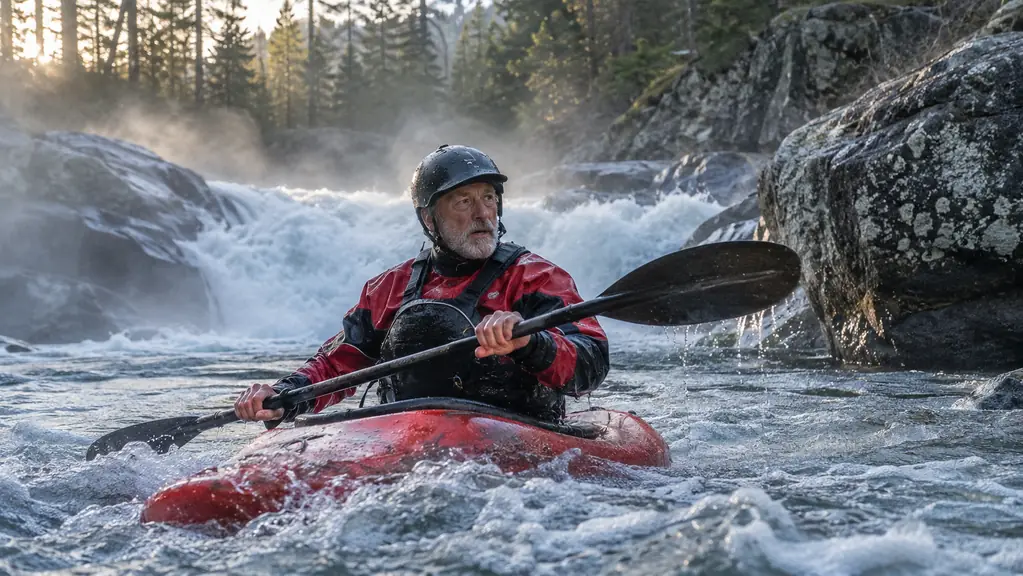
The first camera I carried on the Nantahala rode in a towel inside a plastic bag, and I told myself that was plenty. Halfway down, a sloppy eddy turn put me over, and when I rolled up the bag had an inch of water in the bottom. I spent the rest of that run thinking about the camera instead of reading the water. That is the part people miss about dry storage. The loss is not the gear. The loss is your attention, and attention is the one thing a river will not give back.
My camera goes in a MEIJIA portable all weather waterproof protective hard case now. It is a three liter hard shell in polyethylene, 2.1 pounds, roughly 11.65 inches long by 8.74 wide by 4.06 tall, with a zipper closure and a soft grip handle. That is the whole feature list, and it is enough. None of it replaces scouting, a reliable wet exit, or the judgment to walk a rapid you do not like. What the MEIJIA case does is take one worry off a list that is already too long.
The camera goes in one place, every run
MEIJIA's three liter hard case. Polyethylene shell, 2.1 pounds, zipper closure, soft grip handle. One object to grab at the put-in and one place to check at the take-out.
Amazon Check availability on Amazon →Keeps the camera dry through a swim, not just a splash
Every river day has two kinds of water in it. There is the water you plan for, which is spray off the bow and drips off the paddle. Then there is the water you do not plan for, which is the swim. I have watched people baby a bag all morning, then dump a boat in a hole and come up with a soaked pack. A hard shell rated waterproof with a zipper closure is built for the second kind. On a class III run in cold runoff, the swim is the day. Everything else is the commute.
The hard shell takes the rock hit instead of the lens
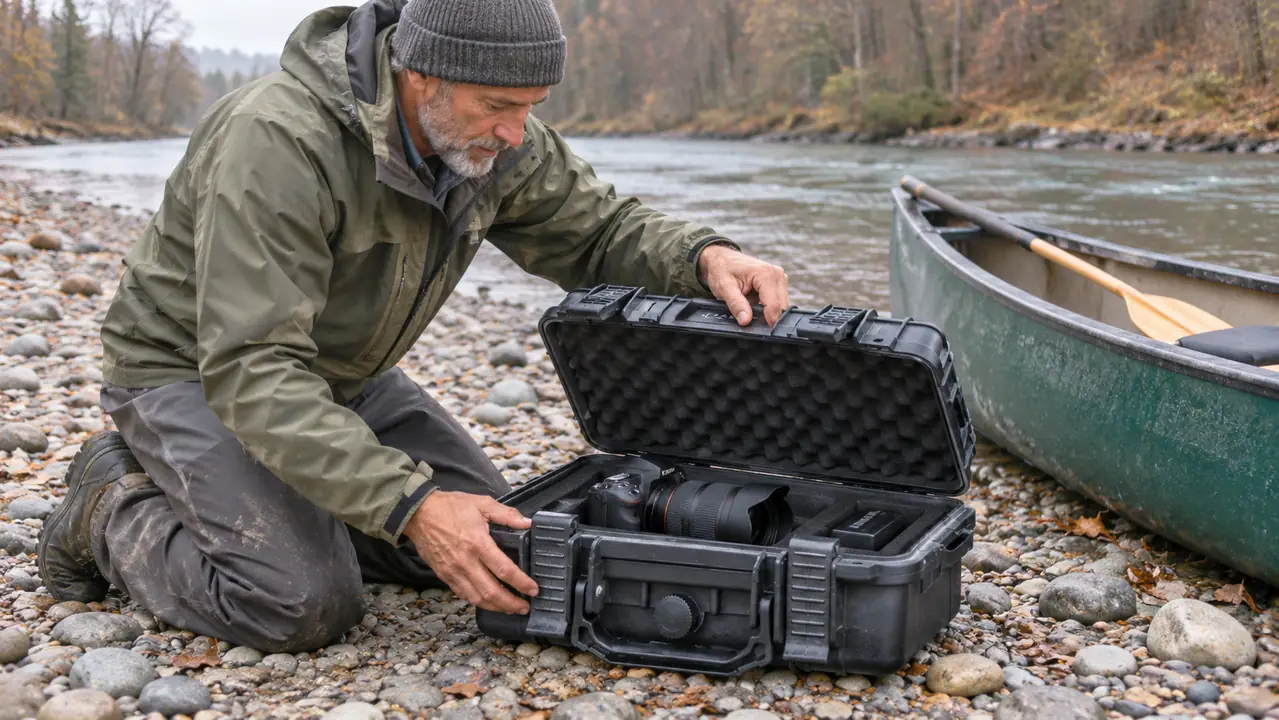
A hard case is not a heroic piece of gear. It is a shell, and its job is to be the thing that gets scratched. I have set mine down on gravel bars, slid it across the floor of the truck, and dropped it off the tailgate onto pavement. Polyethylene does not care. What I care about is that the camera inside never learned about any of it. On a river where you are already carrying a boat, a paddle and a throw rope, a case you can treat carelessly is worth more than a case that has to be handled gently.
One handle to grab with numb hands
Cold water does something to your hands. Fine motor control goes early, and by the time you have run two miles of cold spring runoff you are down to grabbing and holding. A soft grip handle is not a luxury out there. It is the difference between picking the case up on the first try and fumbling it while the group waits on you. I grab the handle, the case comes with me, and there are no straps to thread or buckles to find by feel while standing in an eddy.
Three liters fits a cockpit without crowding it
Space in a whitewater kayak is not about total volume, it is about the shape of the volume. At roughly 11.65 by 8.74 by 4.06 inches this case sits flat behind the seat or ahead of the footpegs depending on the boat. In my solo canoe it goes between the thwart and the float bag. Three liters holds a camera, a spare battery, a phone and a set of keys without turning the cockpit into a junk drawer. I have paddled with people who brought a bigger box and spent the whole day with their knees jammed against it.
The zipper closes in one motion
Whatever closes a dry container has to work when your hands are wet, cold and shaking from a hard ferry. A zipper closure is one motion and one sound. You pull it, you hear it, you know. That is the test I run on any dry storage: can I confirm it is shut without taking my gloves off and squinting at it. On a bank in February that matters more than a clever latch. Simple closures fail less often because there is less of them to fail.
Survives the shuttle and the truck bed
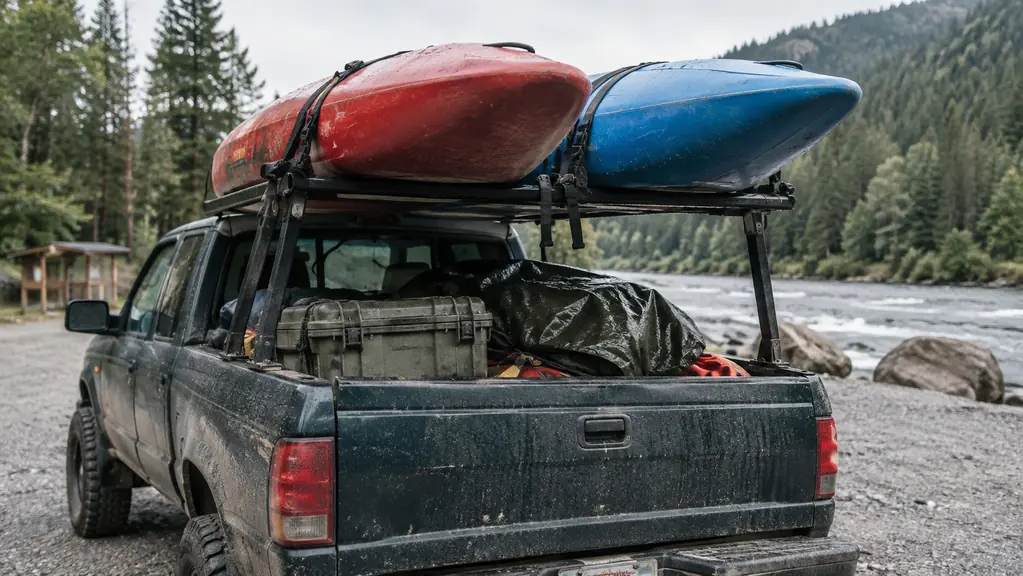
The river is maybe half of what a case has to survive. The other half is the put-in parking area, the shuttle, and the bed of a pickup under a two-boat rack. My gear gets thrown, stacked and sat on. A 2.1 pound hard shell lying in that truck bed next to wet boats and a soaked tarp is not a nice place to be, and it comes out the other side looking about the same. Soft bags lose that fight. They soak up the water off the tarp and pass it along to whatever is inside them.
Handles the constant deck splash on a class III run
There is a version of river photography where the camera stays out on a tether and you shoot as you go. I do that on flatwater and easy class II. Above that the camera goes in the case, because the deck of a kayak in a wave train is a wet place and a camera on a tether eventually meets a rock. The case means the camera stays with me instead of waiting in the truck. That is the whole argument. A camera left at the take-out takes no pictures of the river.
Gives students one clear rule about where the camera goes
In a beginner clinic I have six people, six boats and about four hours. I cannot spend any of it on where somebody's phone is. So I give one rule: anything that has to stay dry goes in a hard case in the boat, and the case goes in the same spot every time. Students who follow it never ask again. Students who improvise with a jacket pocket usually finish the day learning an expensive lesson in a parking lot. Clear rules beat good intentions on the water.
Safe to set down on a wet rock while you scout
Scouting is where a lot of gear gets ruined, not the rapid itself. You eddy out, climb the bank, and set your things on a wet slab while you look at the line. A soft bag laid down in an inch of runoff is a sponge. A hard shell on a damp rock is just a shell on a damp rock. I set mine down, walk the bank, take a few frames of the rapid from above, and pick it up again. Same story on the muddy walk back to the truck.
Removes one decision from a day that is already full
Here is what nobody tells beginners about whitewater. The hard part is not the physical work. The hard part is that you are making decisions constantly, and each one costs something. Where is the eddy. Which side of the hole. Is that a strainer or a shadow. Gear that demands a decision every time you touch it is working against you. A hard case is boring. It goes in the same spot, it shuts the same way, and it asks you nothing. Boring is exactly what you want out of storage.
What I'd Skip
I would skip anything that depends on me being careful. That covers soft bags, camera totes, and any container that has to be set down gently on a bank. I would skip a case so large it changes how the boat handles, and I would skip one that lives in the truck because it will not fit in the boat. Most of all I would skip the idea that any of this makes you safe. A dry case keeps a camera dry. It does not keep you out of a hole and it does not scout a rapid for you. Take the course, paddle with people better than you, and learn to read water. The case is the smallest decision on the list.
Two point one pounds of hard shell buys back the part of your mind that was on the camera instead of the rapid.
One case, one place, every run
MEIJIA portable all weather waterproof hard case. Three liters, 2.1 pounds, polyethylene hard shell, zipper closure, soft grip handle. Check the footprint against your own kit before you order: 11.65 by 8.74 by 4.06 inches.
Amazon Check availability on Amazon →