
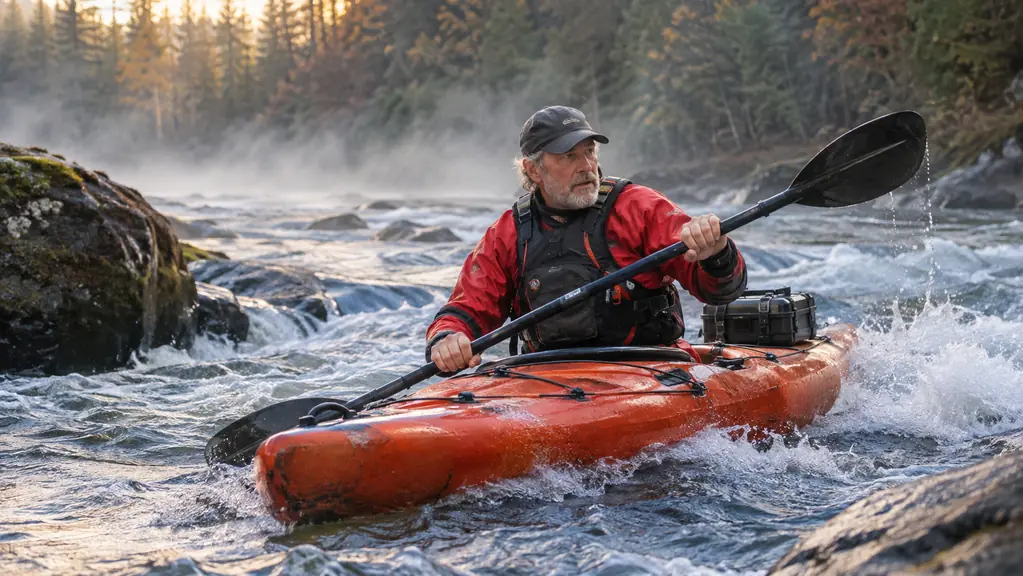
I have paddled whitewater for about thirty years, and for most of that time my camera rode to the river in whatever bag was nearest the door. It cost me on a cool April release day on the Nantahala. I flipped in a wave train I have run a hundred times, rolled up, and felt the weight of a soaked bag hanging on my deck. The camera inside had water in the lens housing. Nothing dramatic, no rescue, no story worth telling at the takeout. Just a slow, stupid loss I had set up for myself. It is also the reason a MEIJIA hard case now rides behind my seat.
The bags I had tried all shared one flaw. Soft pouches and roll-top sacks keep out rain and splashes, and they are fine in the truck bed or the tent. They are not built to go under with you. When you swim a rapid, the bag goes where you go, and a roll-top folded in a hurry on a gravel bar is not the same as one folded carefully at the kitchen table. I knew that. I have said the same thing to students about spray skirts and helmet straps for years. Your gear only counts if it works while you are upside down and busy.
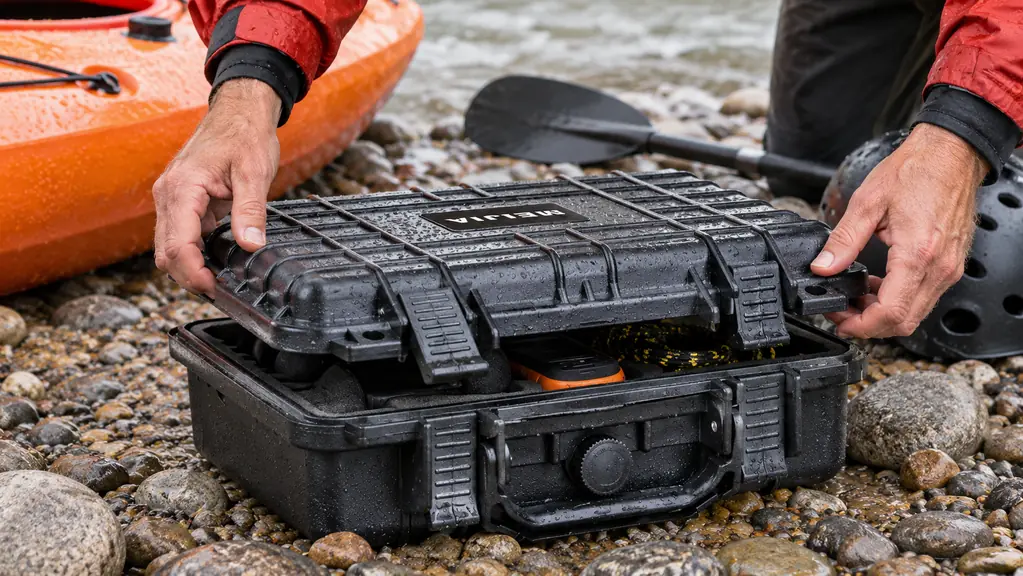
What I wanted was unglamorous, and it is roughly what the MEIJIA Portable All Weather Waterproof Protective Hard Case turned out to be. A rigid shell I could wedge behind the seat of my river runner, set in the bottom of my solo canoe, or leave in the truck between trips. Stiff enough that a camera and a lens were not knocking against each other all day, and small enough not to turn the cockpit into a junk drawer.
The case is a polyethylene hard shell, 11.65 inches long by 8.74 wide by 4.06 deep on the outside, 2.1 pounds empty, with a soft grip handle. Three liters inside. That is a camera body and one lens, or the camera plus a small pouch for keys and a phone. The listing rates it waterproof. I did not pick it because it looked tough in a photo. I picked it because it fits the space I actually have in the boat.
First real test was a dam-release day on the Ocoee, water running cold and pushy. I ran a line I know well, caught an eddy, and stepped out onto a rock to shoot the rest of the group coming through. Then I set the case down in the bilge and paddled the next two miles with it loose behind my seat. At the takeout the camera came out dry and working. That was the whole test. It passed.
What I wanted was a box that would still be a box when I came up wrong side up. The MEIJIA case is that box.
The box that rides in the boat instead of staying in the truck
A hard polyethylene shell, 2.1 pounds empty, three liters inside. Sized to wedge behind a kayak seat or sit in the bottom of a canoe.
Amazon Check Today's Price on Amazon →I keep it behind the seat of my river runner now. In the solo canoe I run a strap through the soft grip handle and set it forward of the stern thwart so it cannot slide. The shell takes the knocks that used to go into a lens. On the drive home it goes in the bed of the pickup with the boats and I do not think about it again until the next put-in.
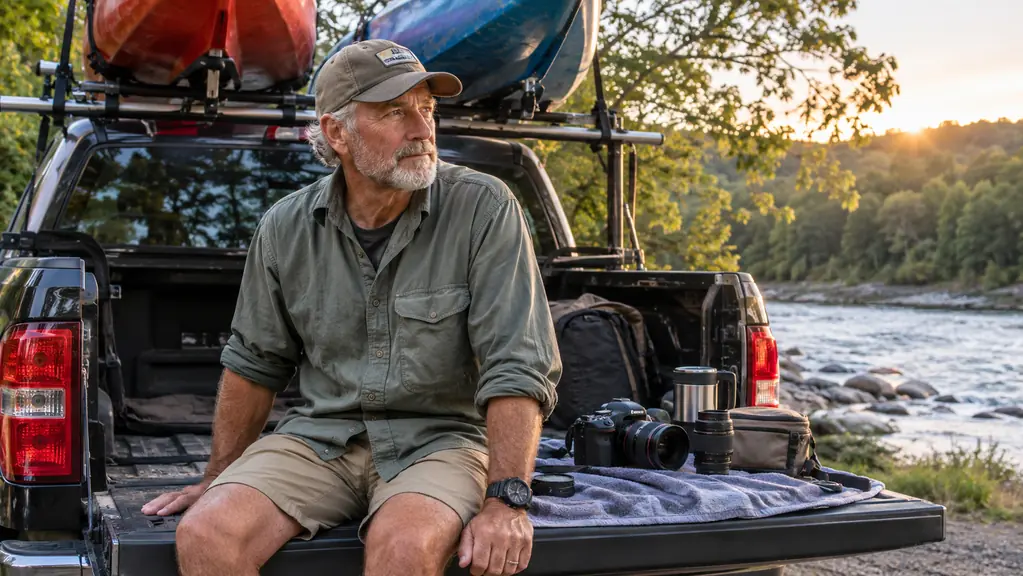
The part I did not expect was how it changed the way I scout. I shoot birds and mountain light from the bank, and I used to leave the camera in the cab on days when the weather looked marginal. Now it comes with me, because bringing it costs me nothing. On a misty morning last spring I got a heron working the shallows below the bridge, and I got it because the camera was in the boat instead of in the truck.
I have also swum with it. Not on purpose. A sticky hole on the Tellico put me over, and I came up with the case still in the boat and the boat still full of water. The camera inside was dry when I got it to the bank. I am not going to tell you that makes the case a rescue device. It does not. It means the box does what the box is supposed to do, which is a lower bar than people assume and one that a lot of bags miss.
Here is what it is not. Three liters is small. If you carry a body, two lenses, a flash and filters, this is not your case. It is also a hard shell with no padding, so I cut a strip of closed-cell foam for the bottom and set the camera on that. And it is a carry case, not a camera bag. There are no dividers. You pack it the way you want it and you live with it.
What actually changed was smaller than the box. I stopped doing arithmetic at the put-in. Before, every trip with the camera came with a little negotiation attached: is this the day I risk it. That negotiation is gone, and I take more photographs because of it. The MEIJIA case did not make me a better paddler. It just removed one excuse for leaving the camera behind.
What I'd Tell You If We Were Sitting at My Kitchen Table
Buy the case if you want a camera on the river. Do not buy it thinking it makes you safer, and do not buy any piece of gear thinking that. Dry storage keeps water off a camera. It does not keep you off a rock. Cold spring runoff on the Ocoee and the Nantahala will still take the breath out of you, and a hard box in the bilge will not change that. Wear the helmet, wear the PFD, learn to roll or learn to swim well, and scout the rapids you have not run before. If you are running class IV and harder, go find a whitewater specific helmet instead of a general water sports one. Take a swiftwater rescue class before you take a camera anywhere a swim is possible. And if you are shopping for a case, measure the space you actually have in your boat first. Most people buy one size too big and then leave it in the truck.
Three liters, 2.1 pounds, and one less thing to worry about at the put-in
If your camera has been staying home on marginal days, this is the simplest fix I have found in thirty years of getting it wrong.
Amazon See the MEIJIA Hard Case on Amazon →