
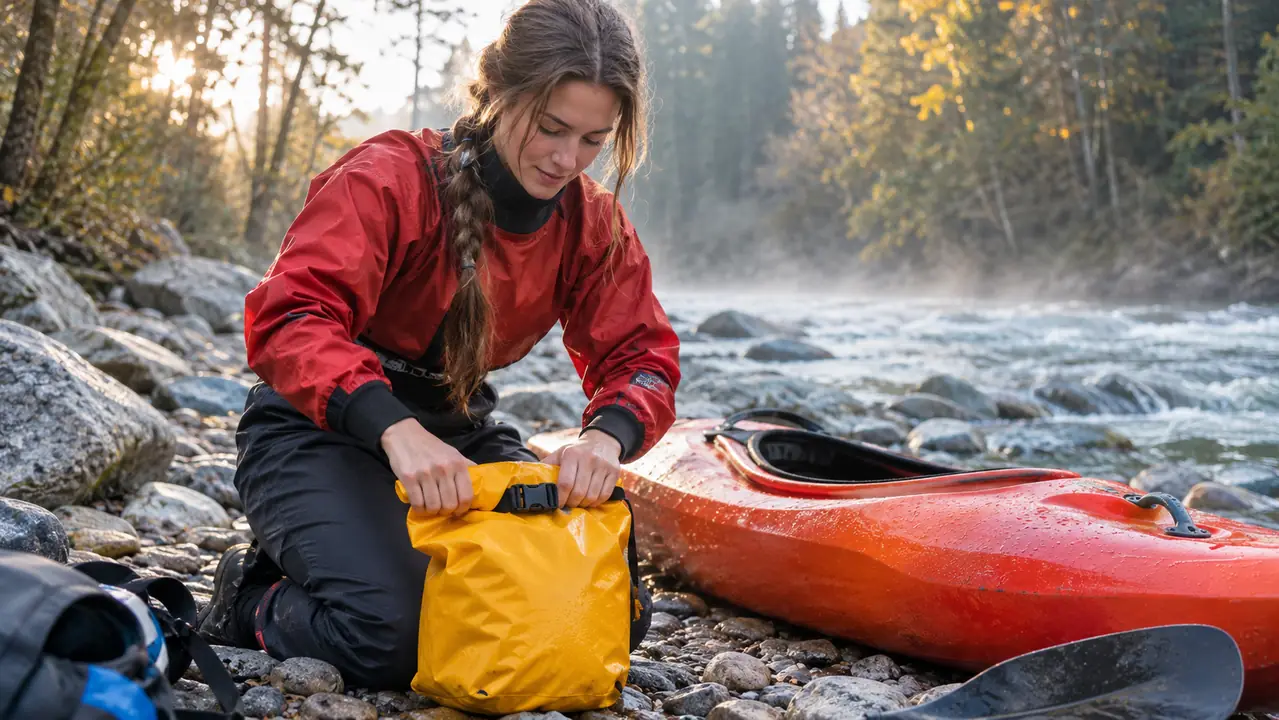
I watched a paddler lose a camera, a phone, and a set of truck keys in about four seconds. Not on a swim he didn't see coming. He braced, he rolled up, he was fine, and his daypack had been sitting under the surface of the eddy the whole time. Water resistant, the tag said. Water resistant means nothing when the bag goes under and stays there while two other people sort out a pinned boat.
I'm Russ Tolliver. I've paddled whitewater about 30 years and I teach weekend beginner clinics on the Ocoee and the Nantahala in western North Carolina. The bag I hand students on the first morning is an Earth Pak roll top dry bag, the 20 liter size. Not because it is fancy. Because a beginner can close it correctly while standing in the rain, and I can check it from the gravel without opening it. That matters more than anything on a spec sheet. Here are ten reasons it earns the space in my boat, in the order I would explain them on the bank.
The bag I put in a beginner's hands on the first morning
Twenty liters, a roll-top seal, and a phone case in the box. The same bag I have been handing out at the put-in for seasons.
Amazon Check Today's Price on Amazon →The roll top lets you check the seal with your own eyes
Every dry bag failure I have seen came down to a closure nobody could inspect. Zippers need clean teeth, and one grain of sand in the wrong place is a slow leak you find out about at bedtime. A roll top is different. You squeeze the air out, fold the top over three or four times, and snap it shut. Clean folds, closed snap, done. I can teach it in about fifteen seconds and I can look at a student's bag from ten feet away and tell whether they got it right.
500D PVC shrugs off rock and boat rash
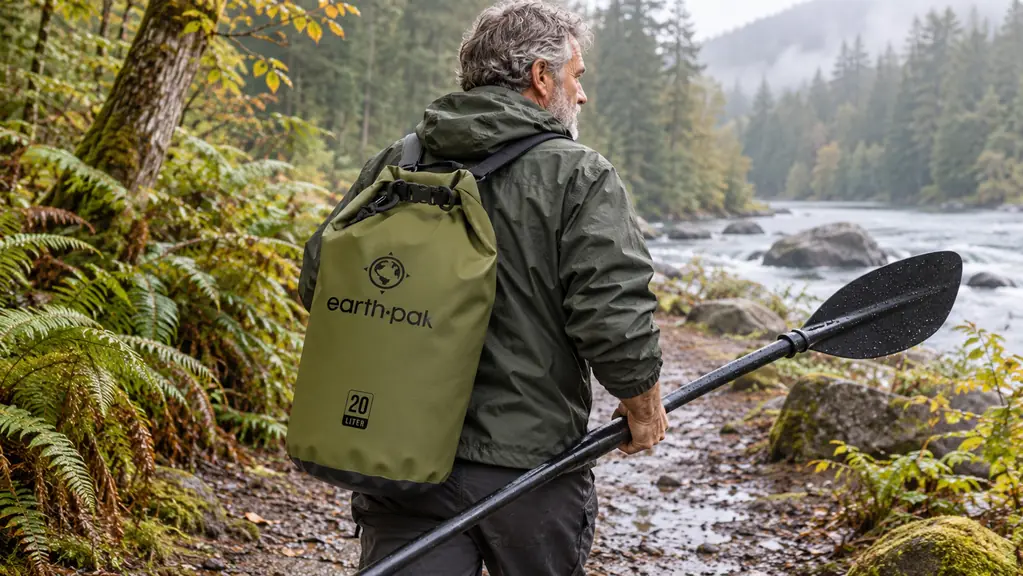
The material is abrasion resistant 500D PVC, and that is the part that matters on a real river day. Bags get dragged over gravel bars at the put-in, shoved under a deck line, and stepped on in the back of a pickup. Thin nylon gives up quietly and starts weeping water through the weave. The Earth Pak shell does not care. Mine has been sat on, dropped off a tailgate, and wedged against a frame for seasons, and the fabric still looks like fabric rather than a worn-out shower curtain.
Twenty liters is the honest size for one river day
It measures 9.5 inches by 9.5 inches by 17 inches, which is enough for a dry layer, a lunch, a first aid kit, a camera, and a headlamp, and not much else. That limit is a feature. I have watched people pack a 40 liter bag for a class II day run and then complain about the weight and the swim it creates in a hole. A bag that fits exactly what the day needs keeps the boat honest. If you are running an overnight, size up. For a day, this is the one.
The IPX8 phone case comes in the box, so the phone stops being the problem
Most people's single most expensive object on the river is the phone in their pocket. This bag ships with an IPX8 certified waterproof phone case included, so the phone goes inside the bag with everything else and you are not juggling a second piece of gear at the put-in. I keep mine in the case, in the bag, until the take-out. No drama, no bag of rice on the kitchen counter, no explaining to Karen why the shuttle number is gone.
It weighs 13.6 ounces empty
Empty, it is 13.6 ounces, which is lighter than most of the water bottles people strap to a boat. That matters for two reasons. First, portages. Second, it rolls down small enough to jam into a stern compartment or under a thwart on the days you are not carrying it on your back. Gear that is a nuisance to stow gets left in the truck, and gear left in the truck is not saving anybody's camera.
Ten feet away, in flat light, on wet gravel, I can tell whether a student's bag is sealed. That is the whole test, and almost no dry bag passes it.
The adjustable shoulder strap turns the walk to the put-in into one trip
The 10 liter and 20 liter sizes include a 24 to 42 inch adjustable shoulder strap, and that strap is the difference between one trip and three. Access trails are usually a quarter mile of mud with a boat on your shoulder and a paddle in your hand, and anything without a strap becomes something you carry in your teeth. With the strap it rides on one shoulder and your hands stay free for the boat. Small thing. You will notice it every single time.
The web handle gives you something real to grab
When a boat swamps, everything loose turns into a loose object in moving water. A bag with a proper web handle is something you can hook a finger through and hand up to the bank, and it is also something you can clip a line to and tow. I have pulled a swamped boat toward an eddy with a bag in one hand more than once. A slick sack with nothing to grab is a sack you end up chasing downstream.
The utility pocket keeps the small things findable
Digging through a full dry bag for a lighter or a set of keys while your hands are cold and the shuttle driver is waiting is a special kind of misery. The utility pocket gives the little items their own place, so you are not unpacking a camera and a first aid kit onto wet gravel to find a car key. It is also where the phone case lives when I want it on the outside and the rest of the bag stays packed.
The snap closure holds your roll while you finish packing
You fold the top down, and the snap keeps the roll from springing open while you stow the bag under a deck or thread the strap through. That sounds like a small convenience until you are kneeling in a foot of water with cold hands. Fumbling with a roll that keeps unfolding is how people end up with a bag that is ninety percent sealed, and ninety percent sealed is the same as open once the boat goes over.
One sentence is all it takes to explain to a beginner
I teach the same line to every clinic group. Squeeze the air out, fold the top over three times, snap it. That is the whole lesson, and a nervous person who has never been in a boat can repeat it back to me correctly. Gear that needs a demonstration is gear that goes wrong the first time nobody is watching. That is why the Earth Pak bag stays in my kit after all these seasons, and why I stopped shopping around for something cleverer.
What I'd Skip
Skip the giant sizes for a day run. The Earth Pak 5 liter and 10 liter make fine small bags for a phone, keys and a snack, and the bigger sizes have their place on overnight trips. What I would not do is buy a 40 or 55 liter bag to cover every situation and then paddle a day run with a heavy, unstable sack in the stern. Match the bag to the day. Second, skip the water resistant pack you already own. Water resistant is a rain shell. Waterproof is a sealed bag. Those are not the same promise and the river will explain the difference.
And the thing I say at the end of every clinic: no bag makes you safe or skilled. It protects your gear. It does not read the water for you, it does not replace scouting from the bank, and it does not replace training or your own judgment about what run you should be on today. Pack well, then paddle like the gear is all you have to lose, because on a bad day it is. Karen and I both keep an Earth Pak bag in the boat for exactly that reason, and mine mostly holds a camera.
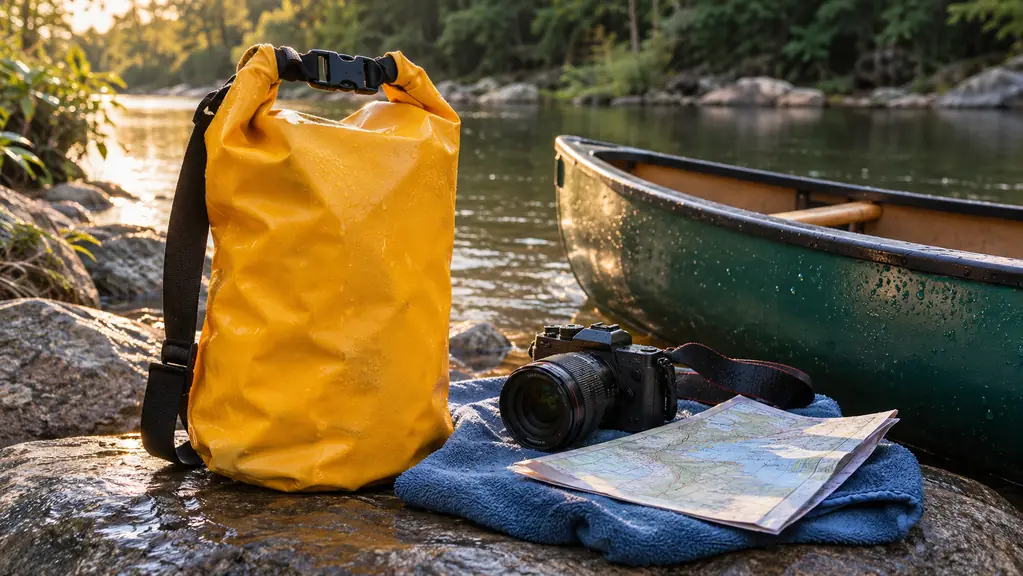
One dry bag, one sentence to close it, a dry camera at the take-out
Twenty liters of 500D PVC with a roll-top seal, a shoulder strap, and an IPX8 phone case included. The same setup I hand students at the put-in.
Amazon Check Today's Price on Amazon →