
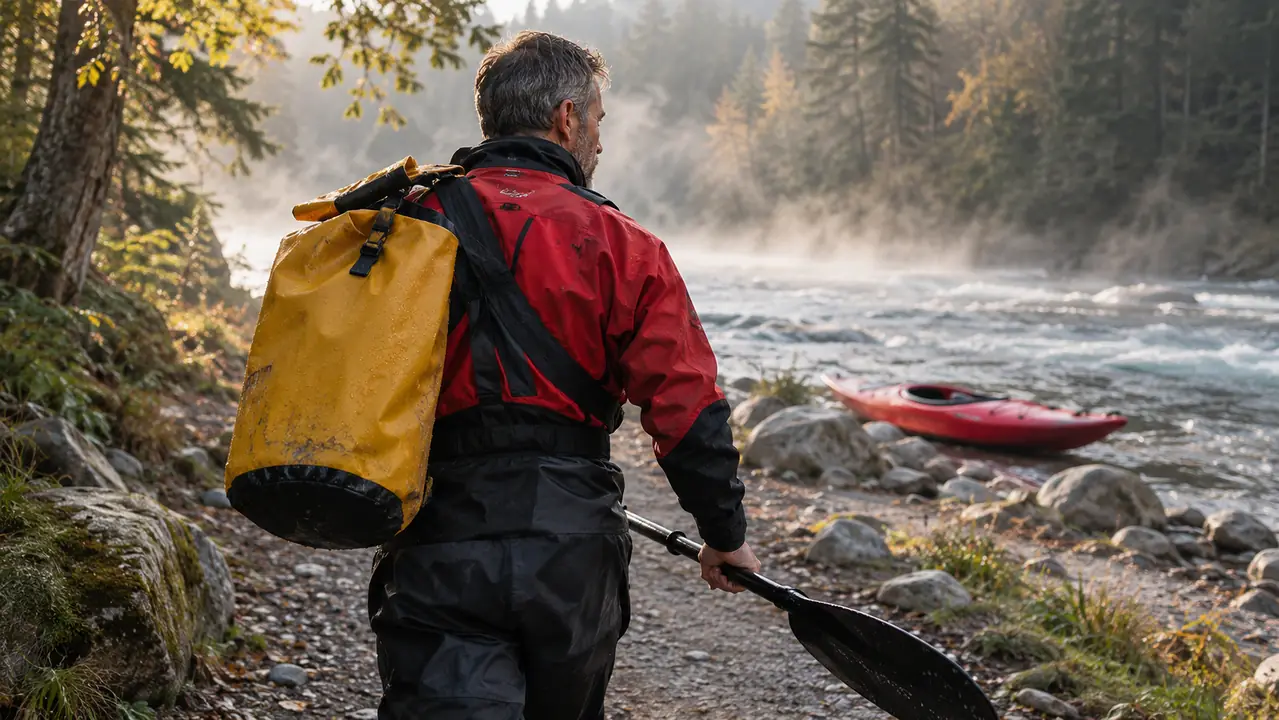
The first thing I check before a dam-release day on the Nantahala is not the gauge. It is whether my camera and my spare layer are actually dry. I have taught whitewater for about thirty years, and I have seen more good river days go sideways over wet gear than over hard moves. That is why the Earth Pak dry bag has had a place in my boat for the last two seasons.
My wife Karen paddles class II and III with me and runs shuttle on the harder days. She packs lighter than I do, but she is the one who asks whether I rolled the top down far enough. We keep two bags in the older pickup under the two-boat rack: one for the camera and one for dry layers, lunch, and the phone case. The 20 liter Earth Pak is the size I reach for on a day run.
I tried the other options first. A hard dry box is fine in the truck, but it does not fit behind the seat of my river runner, and it is one more rigid thing to manage in a swim. Zip-top bags work until they do not, and I have opened a sandwich bag after a dump to find a wet map and a dead headlamp. The roll top bag sits in the middle: soft enough to stuff into an open space, sealed well enough that I am not drying a camera on the tailgate at the takeout.
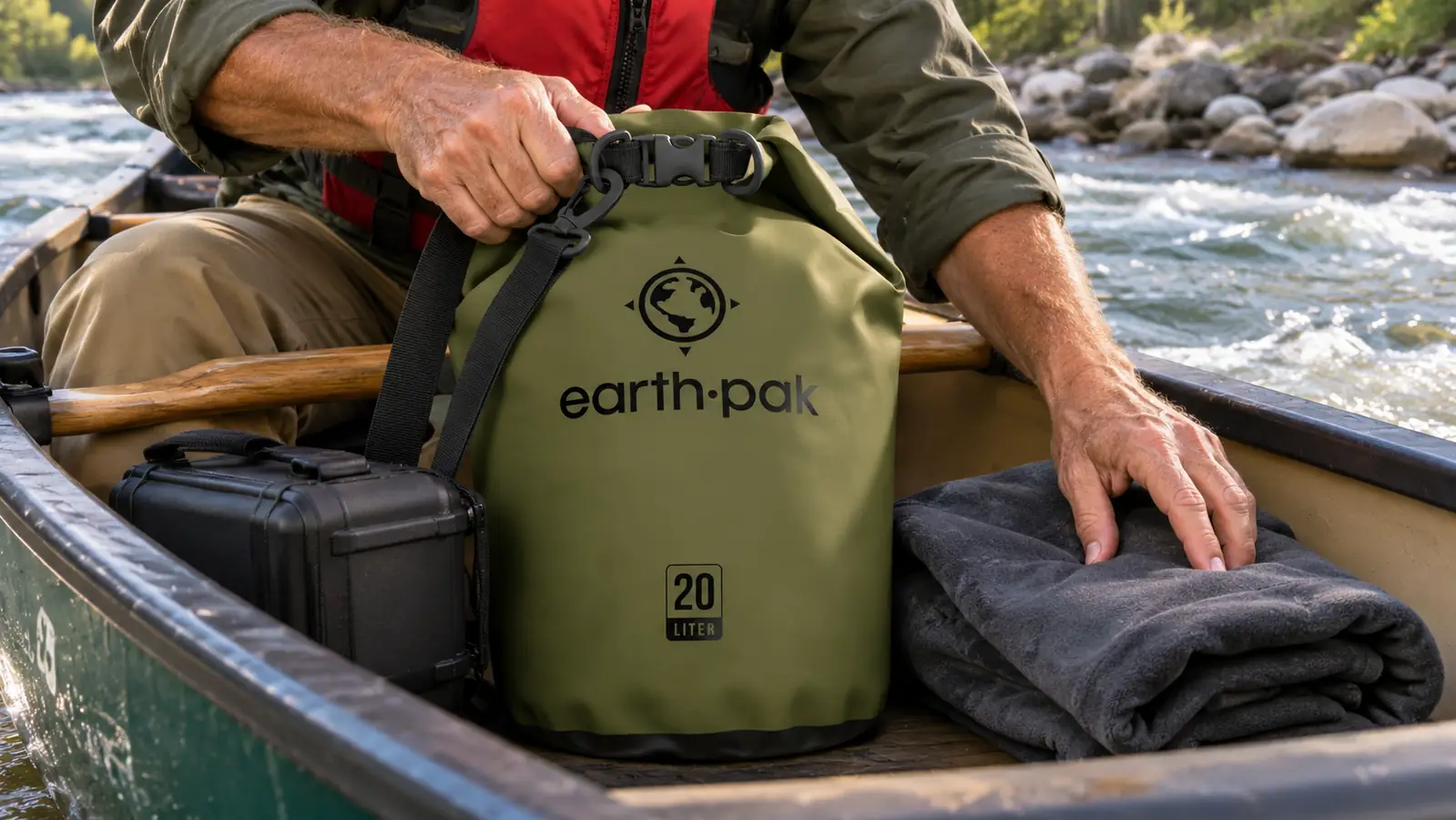
The bag is made from 500D PVC. The roll top closes with a snap, and the 20 liter size measures 9.5 by 9.5 by 17 inches and weighs 13.6 ounces empty. That last number matters to me because I carry it on my shoulder on scout paths and portages. It comes with an IPX8 certified waterproof phone case, which I use for my phone and once for a small notebook. I do not treat any bag as a guarantee. I still pack the camera in a padded case, and I still check the seal before I push off.
What I did not expect was how often the shoulder strap would matter. The 20 liter bag has a 24 to 42 inch adjustable shoulder strap and a web handle. I sling it over one shoulder on the walk up to scout a rapid, and I use the handle to lift it out of the canoe when the floor is full of water. It is not a full backpack harness. On a long portage I would rather have a pack with a real hip belt. For a day run, the strap is enough.
A dry bag does not make you a better paddler. It makes the day after a swim a lot less expensive.
The 20 liter size is the one that fits a camera, a dry layer, and lunch
Earth Pak builds this bag in 500D PVC with a roll top seal and includes an IPX8 phone case. The 20 liter carries like a shoulder bag and weighs 13.6 ounces empty.
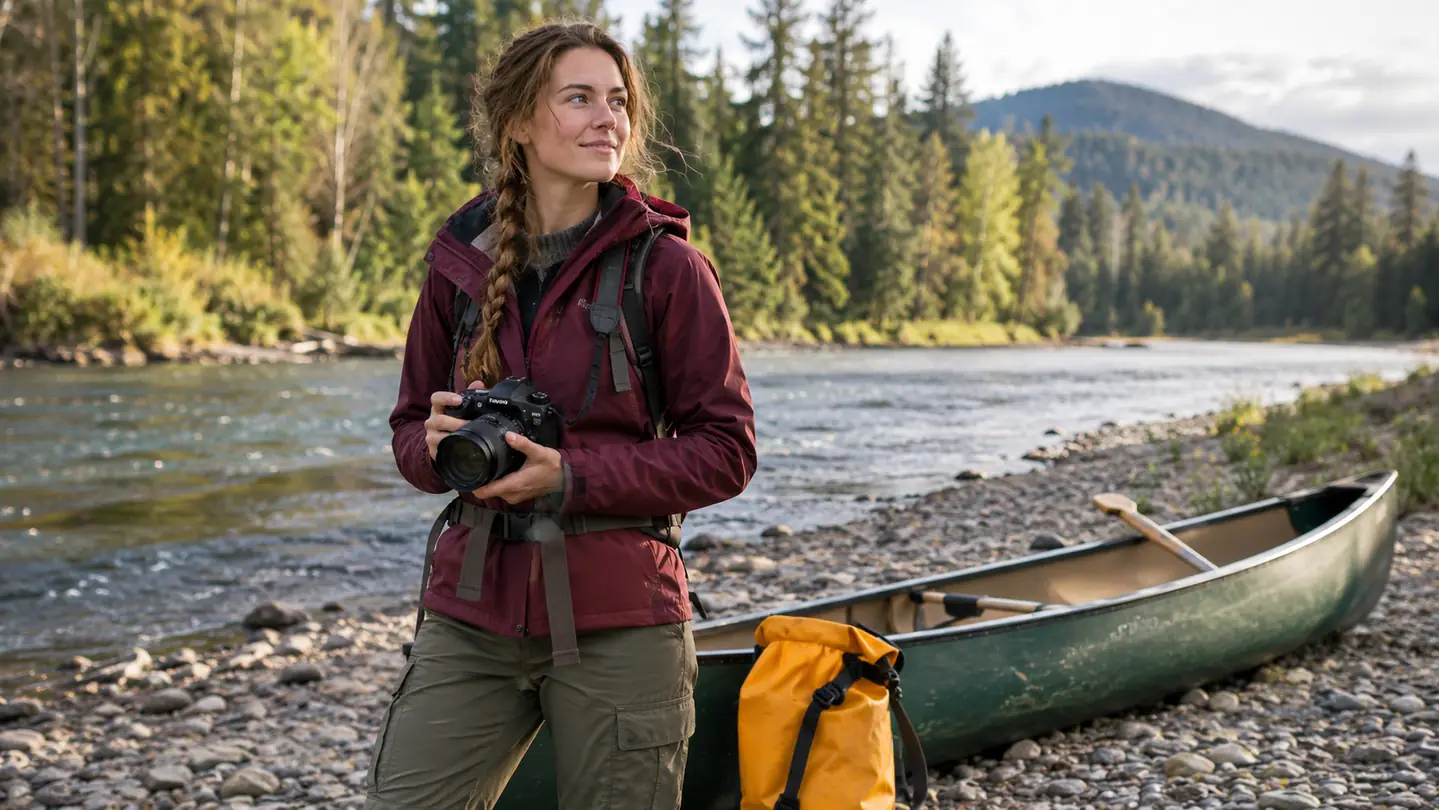
Amazon Check the Earth Pak dry bag on Amazon →I use the bag most when I am photographing from the bank. I keep a small camera, a spare battery, and a lens cloth in the main compartment, and I set the bag between my feet while I wait for a heron to move. On the water, I keep it behind the seat of my river runner or under the thwart in my solo canoe. The roll top has stayed sealed through the usual splashes and one long swim in cold spring runoff. I would not call that a test lab result. I would call it a reason to keep using it.
Where it falls short is honest. A roll top only works if you roll it. If you leave the top folded once and set off, water will find the opening. The bag is also not a substitute for a PFD, a helmet, or practice. I tell my students the same thing every clinic: gear buys you time and keeps your dry layers dry, but it does not make decisions for you. The 20 liter size is a day bag. For an overnight on the river, I would want more room and a different packing plan.
I have also used it as a catch-all in the truck. Wet gloves, a soaked map, a trash bag, all go in the same place so the cab does not turn into a mess. The PVC wipes down with fresh water and a little soap, and I hang it open in the garage to dry. That is the whole care routine. No special cleaner, no hidden zipper to nurse. The snap on the roll top is the only moving part I check, and it has held.
One more thing for paddlers who carry a camera: the phone case is not a camera case. It is an IPX8 case for a phone, and it does that job. My camera still rides in a padded dry bag insert inside the Earth Pak. If you are packing a lens, budget the space. The 20 liter size is enough for a small camera, a layer, lunch, and a phone, but not for a full camera kit and a rescue bag.
What I'd Tell You If We Were Sitting at My Kitchen Table
If we were sitting at my kitchen table, I would tell you to buy the bag for the job you actually do. If you paddle day runs and want your phone, keys, and a dry layer to come out dry, the 20 liter Earth Pak is a sensible choice. If you are running overnight trips, look at the larger sizes or a different packing system. Do not buy it thinking it replaces a roll practice session or a swiftwater rescue class. It does not.
I would also tell you to test the seal in the bathtub before your first river day. Put a paper towel inside, roll the top down at least three times, and give it a shake. If the paper is dry, you know your technique is right. Then practice the same roll on the bank with cold hands. That is the part nobody wants to do, and it is the part that matters when you are standing in the rain at the put-in.
Start with the 20 liter and a bathtub test
The Earth Pak 20 liter dry bag has a roll top seal, a 24 to 42 inch shoulder strap, and an IPX8 phone case in the box. Pack it, seal it, and check it before your next run.
Amazon See the Earth Pak dry bag on Amazon →