
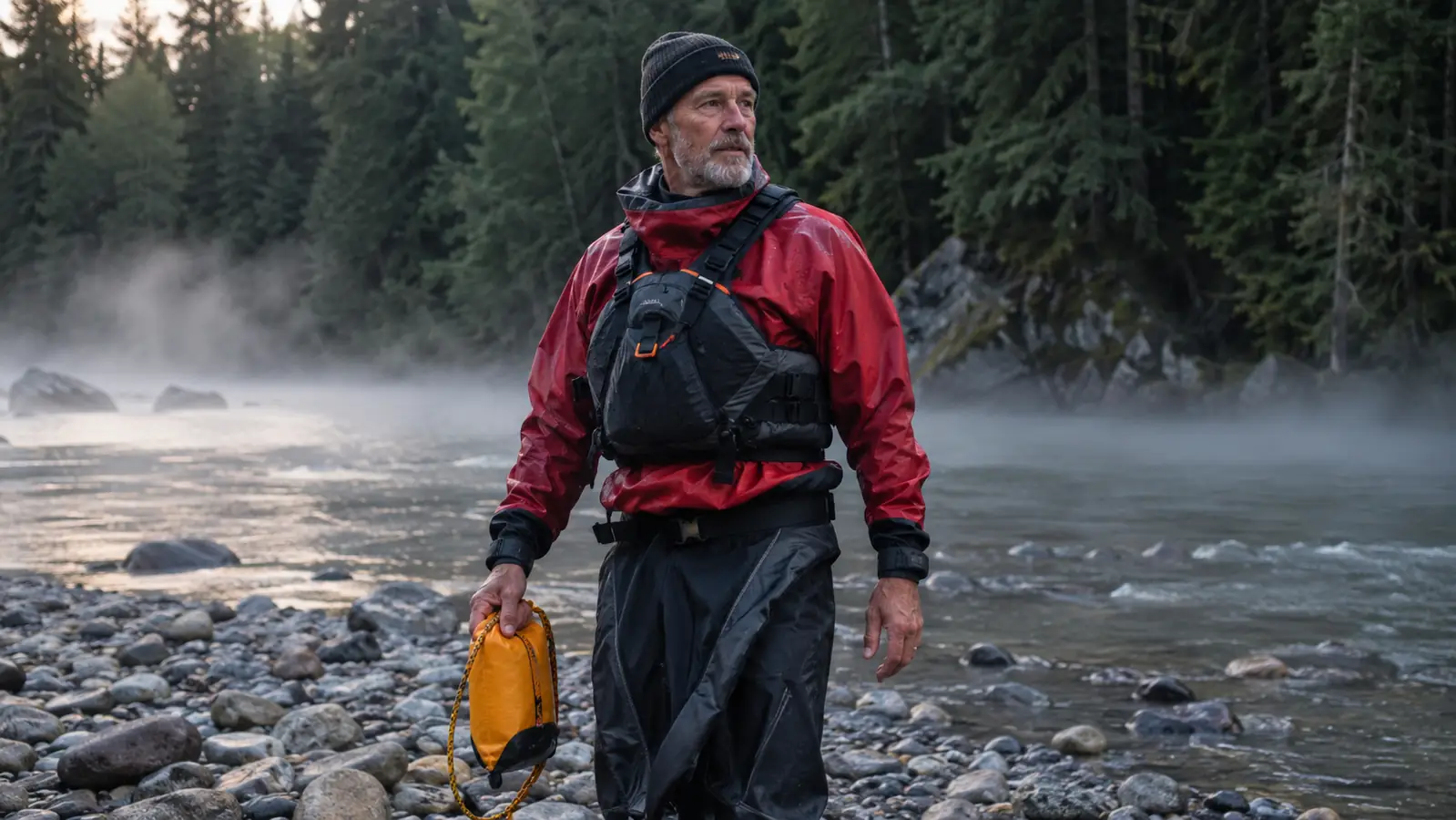
The first time I threw a bag for a swimmer in real trouble, my hands were shaking so badly I nearly dropped it. April on the Nantahala, water somewhere in the high forties, a young man pinned on a rock with his kayak filling up. The bag I threw was a Scotty, fifty feet of floating rope in a bag about the size of a coffee can, and it is the piece of rescue gear I have used the most in thirty years of whitewater. Not because I am some kind of hero. Because a throw bag is the one tool that turns a bystander into help.
Let me say the plain thing first, because I say it to every clinic group I take out. Gear does not rescue anybody. A bag in your boat is a rope and a chance, nothing more. What makes it work is that you have thrown it a hundred times in practice and you know how to talk to a frightened person while you do it. Take a swiftwater rescue course. Learn to read a strainer before you learn to run one. Then carry the bag. Here are ten reasons I do, and ten reasons I hand one to every paddler who comes through my weekend clinics.
The Bag That Rides on My Console, Not in the Truck
Fifty feet of 9/32 inch floating MFP rope, a self-draining bag, an adjustable strap and a 3M reflective safety band. It is the rescue gear I reach for most and the one I have replaced least.
Amazon Check Today's Price on Amazon →Fifty feet reaches the swimmer most banks cannot
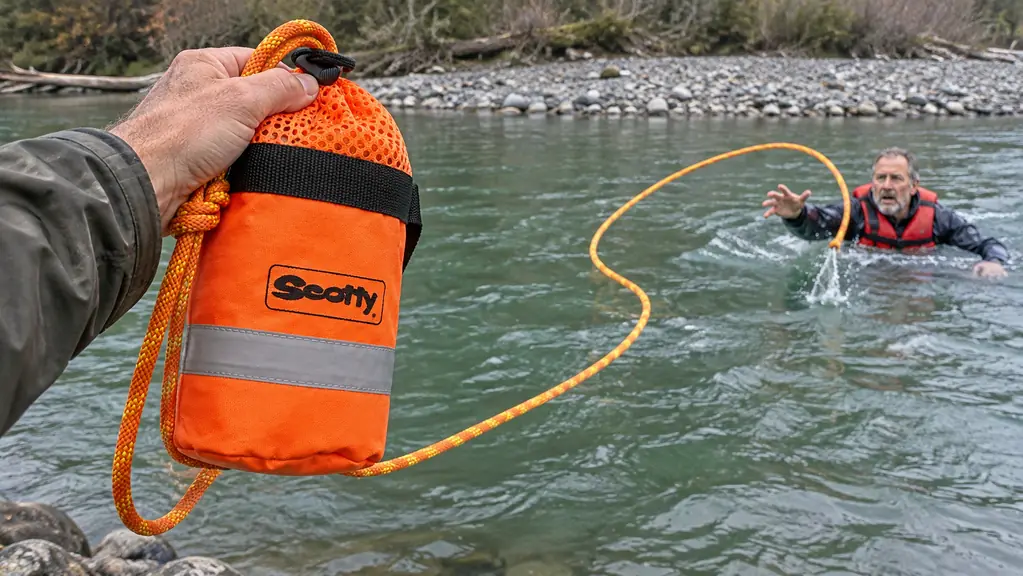
Most of the rivers I run have a channel roughly thirty to fifty feet wide at the current line. That number matters. A fifty foot bag, like the Scotty 0793 with its fifty feet of 9/32 inch braided rope, lets you stand on the bank and put the bag past the swimmer instead of at them, so they can reach it as the current carries them down. Rope that lands short is a rope that mostly teaches you where to stand next time.
Floating rope stays where a swimmer can see it
MFP polypropylene floats. That is the whole reason a throw bag belongs in a river boat and a coil of hardware store line does not. Sinking rope disappears under the surface, and the person you are trying to help then has nothing to grab and nothing to watch. Floating line rides the top of the current, so a swimmer can track it with their eyes while they are getting knocked around, and your second throw is not starting from a sunken mess.
The bag drains itself instead of turning into a wet brick
A throw bag that holds water is a bag you quietly stop carrying. The Scotty uses a self-draining nylon and polyester bag, so after a full day on the river, or after one throw into the current, it comes up light instead of heavy. I have pulled bags out of other people's boats that weighed three times what they should and smelled like a pond. Those bags stay in the truck. A bag that drains gets clipped back on the boat and thrown again.
The line is rated to 550 pounds, which covers a swimmer
The 0793 carries 9/32 inch braided line rated at 550 pounds, or 300 kilograms if you think in metric. Handy number to know. It means the bag is built for pulling a swimmer out of the current and, with care and the right technique, helping recover a swamped boat. It does not mean you can rig it as a highline or drag a pinned kayak with a vehicle. Learn that difference before you load it up, not after.
The reflective band buys you a second look at dusk
Most of my evening paddles end with the light going flat and gray, and that is exactly when a bag set on a bank is hardest to find. The 3M reflective safety band on the outside catches a headlamp or a shuttle driver's lights and gives you one more chance at being seen. Small detail. It is also the kind of detail that matters when somebody is walking a bank in the dark looking for the rope you left behind.
The adjustable strap lets you throw it or wear it
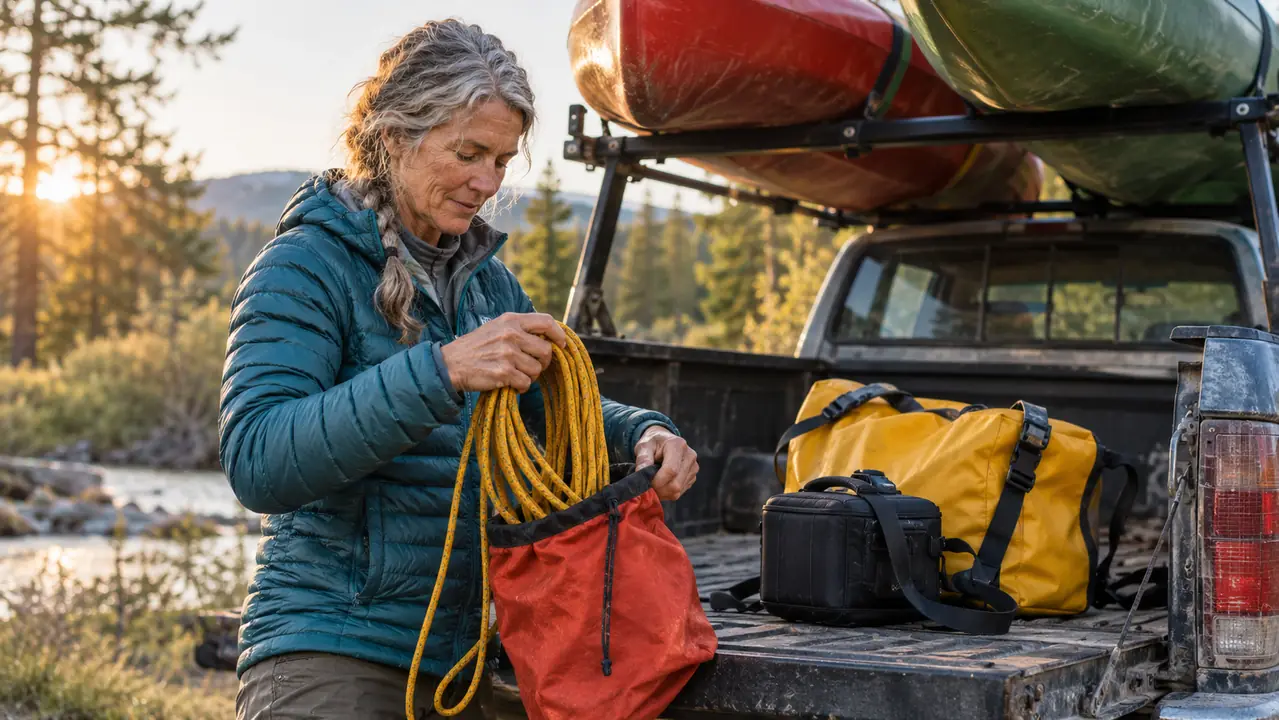
You can carry a throw bag three ways: in your hand, clipped to the boat, or on your body. The adjustable strap covers all three. I keep it over my shoulder when I am scouting a rapid on foot, because a bag in your hand is a bag you set down, and a bag you set down is a bag that is fifty yards behind you when somebody swims. Wear it and it comes with you, which is the only property that counts.
It fits in a cockpit or under a deck bungee
The bag measures five inches long by four inches wide, one size, which is small enough to tuck between the seat and the float bag in my river runner. It also sits under the bungees on the bow of my solo canoe without crowding a dry bag or my camera case. Gear that does not fit does not get carried, and gear that does not get carried is not rescue gear. This fits, so it goes on every trip, including the flatwater ones.
A throw beats a swim toward a swimmer
When somebody comes out of their boat, a lot of paddlers instinctively go after them. That instinct has drowned competent people. A swimmer in cold current is heavy, panicked, and stronger than you expect, and now there are two of you in the water. A bag lets you stay planted on the bank, on a rock, or on the eddy line, and put the rescue within their reach from a place where your own feet are still under you.
It gives beginners a real job on a rescue day
In my clinics, the throw bag is the first rescue skill I teach, ahead of ferrying, ahead of eddy turns, ahead of everything else. It hands a new paddler something useful to do that is not chasing a swimmer downstream. We practice on land first, then on moving water, then with a person in the current playing the swimmer. A beginner who can throw accurately and speak calmly is worth more on a bank than a nervous paddler in a boat.
It is the gear I have replaced least and thrown most
I have gone through paddles, helmets, sprayskirts, and more dry bags than I want to count out loud. The Scotty bag has been on my console for years, thrown in practice hundreds of times and used for real maybe nine. Check the rope for abrasion after every use, hang it to dry, retire it when the line frays. Do that and it will outlast the boat you carry it in, which is a fair trade for something you hope never to need.
What I'd Skip
Skip the hundred foot bag for day trips. Extra rope is extra to manage, extra to tangle, and extra to coil on a bank with cold hands. Skip the waist pouch as your only bag, because it sits low and awkward and you will leave it in the truck. Skip storing it wet in a hatch all season. And skip the idea that owning a bag makes you a rescuer. The bag is not the skill. Take the swiftwater class, practice the throw on land until it is boring, learn to coil the line back in the dark. If you want one bag that covers bank, boat and shoulder without fuss, the 50-foot Scotty is the one I keep buying for students. It stays in the boat. That is the whole point.
Nine real deployments and hundreds of practice throws later, the same bag is still clipped to my boat.
Buy the Bag, Then Go Practice With It
Fifty feet of floating rope, a self-draining bag, an adjustable strap, a reflective band. Learn to throw it before the day you need it. That is the only advice I have on the subject, and I have given it a few hundred times.
Amazon Check Today's Price on Amazon →