
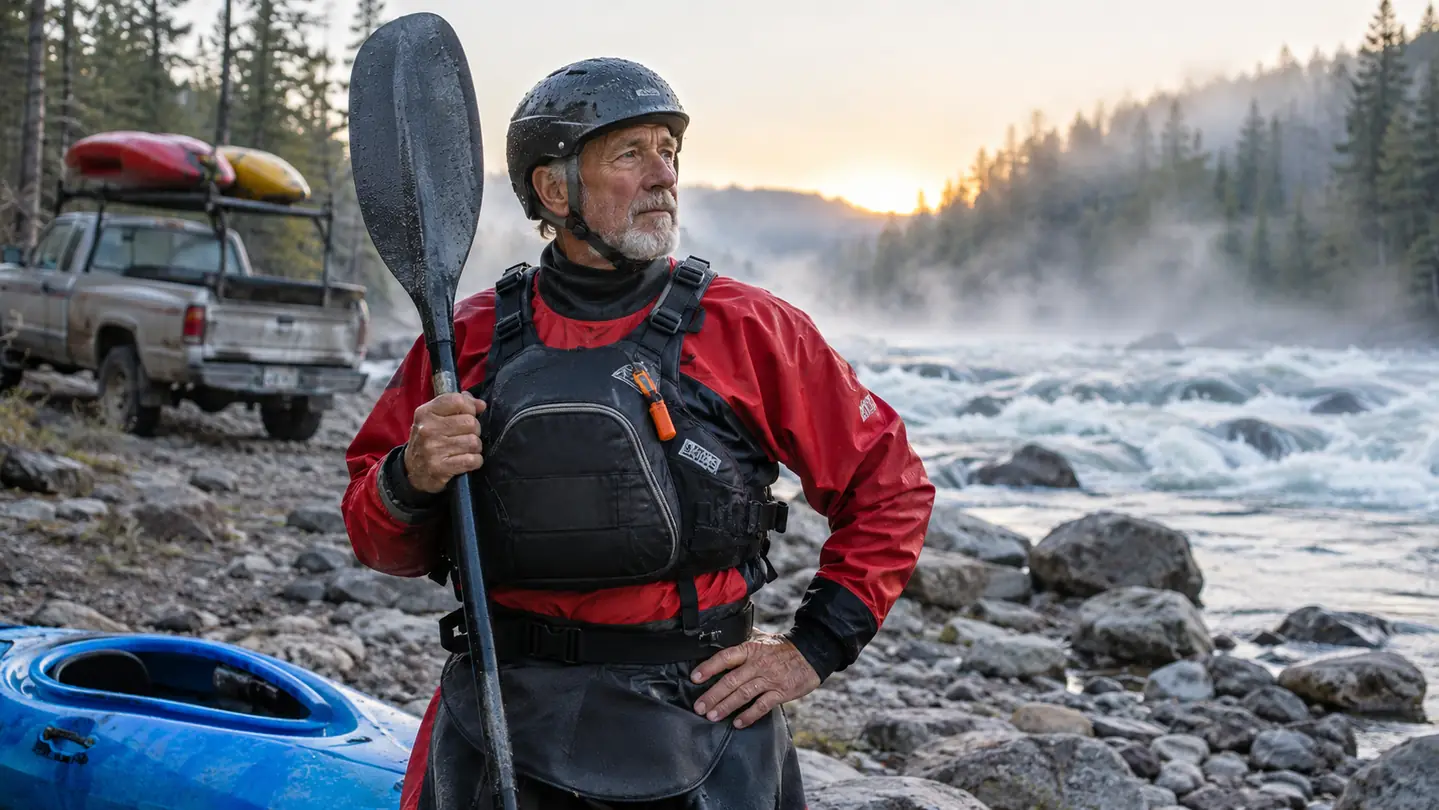
The first throw bag I owned spent eleven years in the back of my boat. I checked it every spring, told myself it was still good, and paddled on. That is the thing about rescue gear. It only gets tested on the days you did not plan for, and when that day comes it either works or you find out in front of everybody.
Two springs ago I got my answer on a dam-release weekend. Six beginners in a clinic, cold water, class II plus, the kind of day where the release schedule makes the river push harder than the guidebook says. One of them flipped in a chute and swam. I went for my bag and the rope came out in a knot I could not clear with cold hands. The swimmer was fine, self-rescued into an eddy, but the throw I finally managed landed eight feet short of where I wanted it. Nobody got hurt. I still think about it.
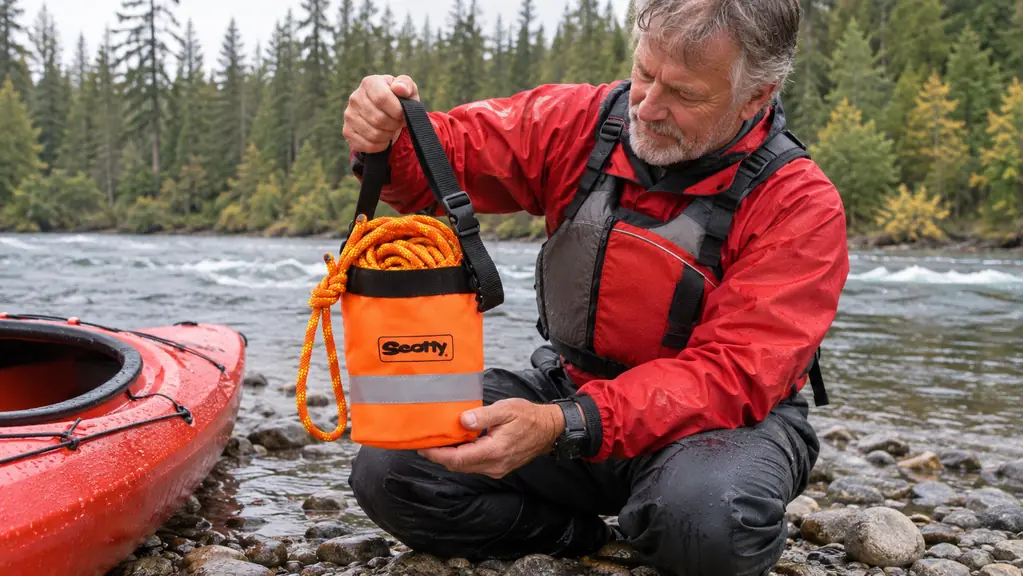
That week I replaced it with the Scotty #0793 Rescue Throw Bag, fifty feet of floating MFP polypropylene rope in a self-draining bag. I did not buy it because a website told me to. I bought it because I wanted a bag I could open with one hand and a rope that would not sink out of reach while I was hauling it back in.
What sold me after one season is how the whole thing behaves when it is wet. The MFP rope floats, the braid stays workable instead of going stiff, and the bag is nylon and polyester with drain holes so it does not sit full of river. Fifty feet by 9/32 inch, 550 pound test. Packed, it measures about five inches by four. It rides on my belt or clips inside the cockpit and I forget it is there until I need it.
The strap is adjustable and there is a 3M reflective band on the outside of the bag. That band matters more than I expected. On late evening shuttle runs, and in fog that sits on the water until nine in the morning, a reflective band is the difference between being seen and being looked for.
The rope floats. That sounds like a small detail until you are hauling it back across moving water and the current is trying to take it under.
The bag I clip on before I pull my skirt
Fifty feet of floating MFP rope, a self-draining bag, an adjustable strap and a reflective band. This is the one that lives on my belt now, not under my air bags.
Amazon Check Today's Price on Amazon →The first thing I noticed is that a self-draining bag empties fast. Pull it out of the water, one shake, and it is light again. My old bag held water like a bucket and got heavier every time I repacked it.
The second thing is the throw itself. Fifty feet is more rope than most recreational paddlers need on class II, and more rope means more to manage. I tell students to pull out about ten feet before they throw and keep the rest coiled in the bag, because a bag full of loose rope is a bag full of tangles. The Scotty bag throws clean when it is packed clean. That part is on you, not on the bag.
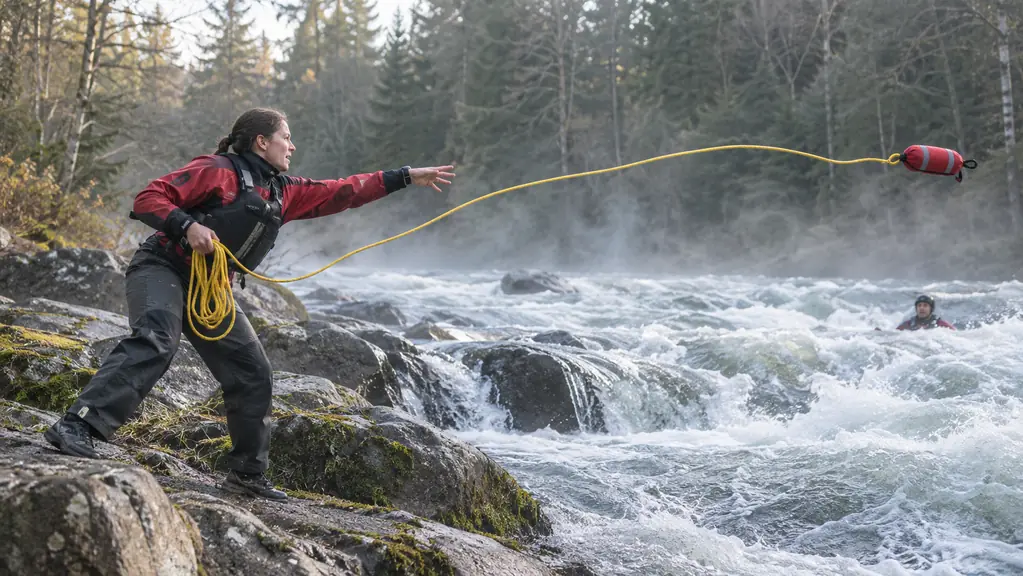
In clinics I use it as a teaching tool more than a rescue tool. I have beginners throw it at a target cone on the grass for twenty minutes before we ever get on the water, then again from the bank. The adjustable strap sizes down for a thirteen year old and fits over a dry suit on a cold release day, and the bag takes being dragged through gravel without complaint. Three seasons in, the rope is still sound and the reflective band is still intact. There is a reason it sits at 4.7 stars across more than 1,300 reviews.
What it will not do is worth saying plainly. It will not fix a bad throw and it will not turn a fifty foot reach into a hundred. Floating rope will still wrap a rock or a strainer if your line is wrong, and I have watched floating rope get pulled under a hydraulic edge and stay there. The bag is not a substitute for a rescue vest with a quick release tether, and it is not a substitute for a swiftwater class. I have had other bags whose strap frayed at the seam after two hard seasons. This one has held, but I check it every spring anyway.
One last practical note. I shoot birds and mountain scenery from the boat and the bank, so there is a camera in a dry box behind my seat, and space in a solo canoe is not free. A bag that packs to five inches by four earns its spot. Mine lives on the belt, the camera box stays behind the seat, and neither one gets in the way of the other.
What I'd Tell You If We Were Sitting at My Kitchen Table
If we were sitting at my kitchen table with coffee, here is what I would say. Buy the Scotty bag, then get in the habit of carrying it where you can actually reach it. A throw bag buried under air bags behind the seat is a throw bag you will not get to in the three seconds that matter. Clip it on your belt or in the cockpit within arm's reach, and check the strap and the rope every spring before the first release weekend.
Then go practice with it. Take a swiftwater rescue course if you paddle class III or harder, and if you teach, get the instructor certification. Throw at a target from your knees, from a seated position in the boat, with cold hands, with gloves on. Practice repacking without looking at the bag. Practice your whistle signals and your commands. Gear is the easy part. Judgment on a river is not something you can order online, and no bag I have ever carried has made a decision for me.
A throw bag you will actually reach for
Floating 50 foot MFP rope, a self-draining bag, an adjustable strap and a 3M reflective band. Mine rides on my belt every river day now, and I repack it before I drive home.
Amazon Check Today's Price on Amazon →