
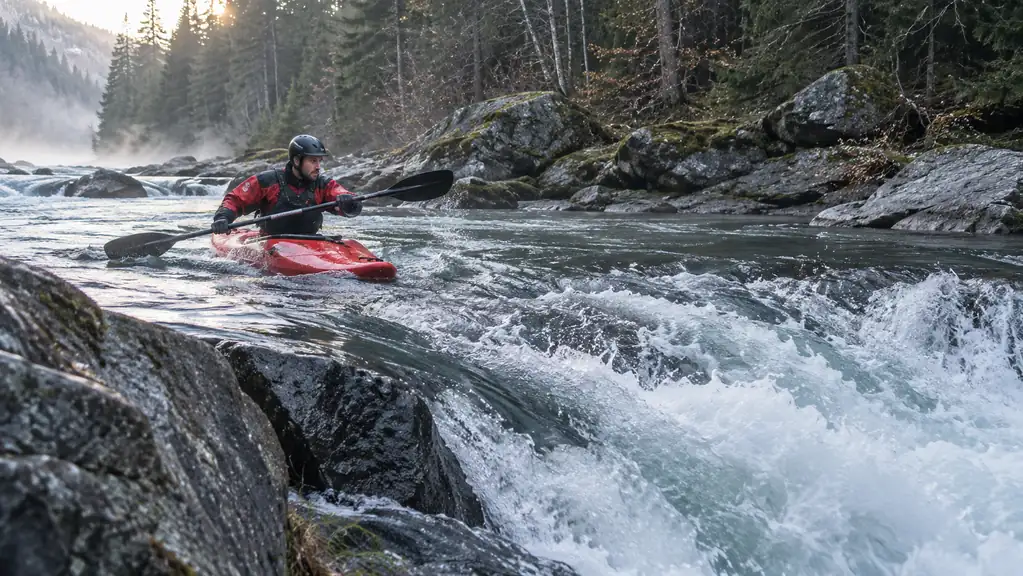
I have taught beginner whitewater clinics on the Ocoee and Nantahala for enough springs to know that most paddlers do not need more foam strapped to their chest. They need a vest they can move in. The Onyx MoveVent Dynamic Paddle Vest is the one I hand to students who show up in a bulky, borrowed PFD and spend the first hour fighting it. It is not a substitute for a helmet, a throw rope, or good judgment. It is a piece of gear that lets those things work better.
Karen and I run shuttle on dam-release days, and I paddle a river runner and a solo canoe. My camera goes in a dry bag, so I care about bulk behind the seat and around the shoulders. The MoveVent is built for that kind of day: a mesh panel in the back, large armholes, and adjustable side belts and shoulder straps. Here are ten reasons it beats a bulky PFD on the river, in the order I would explain them to a new student at the put-in.
The vest I hand out at the put-in
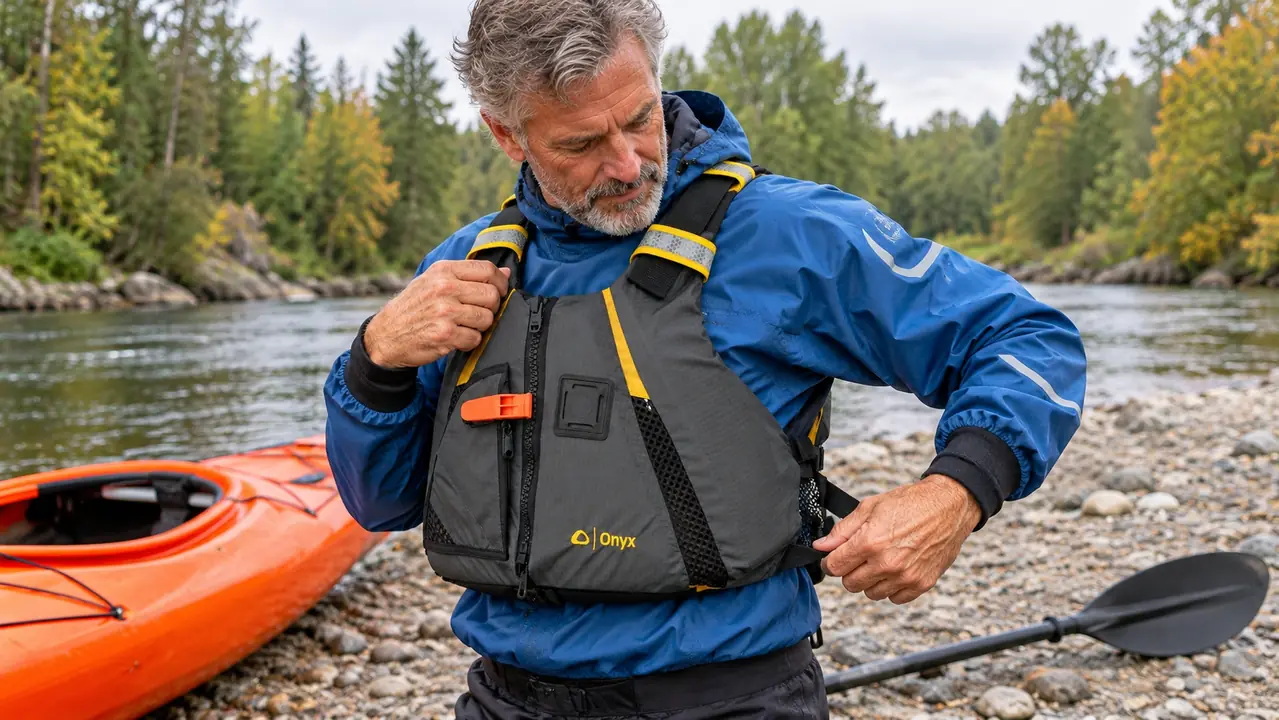
Onyx built the MoveVent around paddling motion: a mesh back panel, large armholes, and adjustable side belts and shoulder straps. Check the current listing and the 90 to 300 pound fit range before you buy.
Amazon See the Onyx MoveVent on Amazon →The mesh back panel lets your seat do its job
A bulky PFD turns a kayak seat into a wedge under your shoulder blades. The MoveVent has a mesh panel in the back that accommodates most canoe and kayak seats. On a long flatwater stretch or a day of eddy hops, that means the seat back sits against mesh instead of a slab of foam. I notice it most in my solo canoe, where I am kneeling and twisting for hours. Less bulk behind me means I can sit up and breathe.
Large armholes keep your forward stroke clean
The armholes on a bulky jacket catch the shaft of your paddle at the end of the stroke. The MoveVent lists large armhole openings, and that is the first thing I check when a student rolls or does a sweep stroke. You want the vest to move with your shoulders, not fight them. I am not going to tell you a vest makes you a better paddler. I will tell you that a vest that lets your shoulders turn is one less thing to fight on the river.
Adjustable side belts and shoulder straps tune the fit
A loose PFD rides up when you swim. A tight one restricts your breathing. The MoveVent uses adjustable side belts and shoulder straps, plus neoprene fabric at the fit points. I set the side belts first, then the shoulders, then test it by raising both arms over my head. If the vest rides up to my ears, it is not fitted yet. That is a five minute adjustment at the truck, not a reason to buy a different size.
The buckle and zipper closure gives you two points to secure
The MoveVent lists a buckle and zipper closure. You zip the front and cinch the buckle, then check the shoulder straps. I like a front I can check with my hands in the cold. On spring runoff days my fingers are stiff, and a simple buckle is easier than a maze of clips. Zip it, buckle it, tug the shoulder straps, and get on the water. No mystery, no extra steps to forget at the put-in.
Neoprene at the fit points is easier on a paddling top
Neoprene fabric is listed in the specs, and it matters when you are wearing a dry top or a long sleeve paddling top. A hard nylon edge can rub under the arm after a few hours. The neoprene fabric on the MoveVent sits against the body with less bite. I still check for chafe at the end of the day, because every body is different. But I have fewer red marks to report from a vest with soft fabric at the fit points than from a stiff, boxy PFD.
The 90 to 300 pound fit range covers most loaner gear
The MoveVent is listed as Medium-Large and fits people 90 pounds and over, with a maximum weight recommendation of 300 pounds. That is a wide range for a club or a family. I keep a couple of vests at the truck for students who forgot theirs, and a range like this means fewer sizes to carry. It does not replace trying it on. A vest that fits one 200 pound paddler may sit wrong on another. But the range is honest and useful.
At 1.7 pounds it packs small in the truck
The listed item weight is 1.7 pounds. That is light enough to hang on a hook in the shed and forget until the next trip. It also matters when you are carrying gear up from the river at the end of the day. I am 61, and I feel every extra pound on the hike back to the truck. A lighter vest does not make the carry easy, but it makes it easier. The flexible material also lets it fold into a tote.
The built-in whistle keeps a signal on your body
The MoveVent includes a built-in whistle. I carry a whistle on a lanyard too, but a backup on the vest is good practice. River noise eats voices. If you swim and get separated from your boat, three blasts on a whistle carry farther than shouting. I teach students to check the whistle at the put-in the same way they check their helmet strap. It is not a rescue plan. It is one more way to be heard when the plan goes sideways.
SOLAS-grade reflective accents help in low light
The specs list SOLAS-grade reflective accents. I am on the water early in the spring and late in the fall, and low light is real. Reflective accents do not make you visible to every boater, and they do not replace a light or a bright helmet. They do give a shuttle driver or another paddler one more chance to pick you out against a dark bank. On a dusky takeout, that is worth having.
The simple build and one year warranty are easy to live with
The MoveVent is nylon, with a buckle and zipper closure and a one year manufacturer warranty. It is gear I can rinse, hang, and inspect without a manual. At the start of every season I check the straps, the buckle, and the stitching. If something fails, the warranty gives me a path. Simple gear is not automatically better gear, but it is easier to keep in working order. That matters when you are loading boats before a dam release.
What I'd Skip
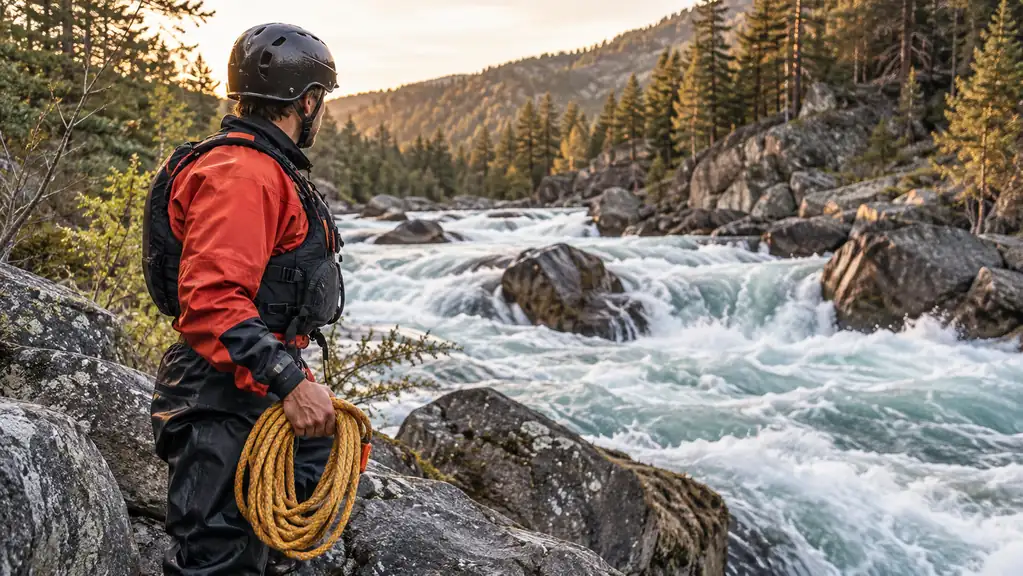
I would skip the heavy, stiff PFD that turns your shoulders into a cage. I would skip a vest that rides up when you raise your arms, and I would skip any fit that depends on a single strap. I would also skip the idea that buying a vest is the same as being ready for a rapid. The MoveVent is a well-made piece of gear with a mesh back, large armholes, adjustable side belts and shoulder straps, and a built-in whistle. It still needs a helmet, a throw rope, a paddling partner, and a decision to scout when the line is not clear. Gear supports judgment. It does not replace it.
At 1.7 pounds, the MoveVent is light enough to hang by the door and forget until the next dam release.
Fit it at the truck, then forget it on the water
The Onyx MoveVent Dynamic Paddle Vest gives you a mesh back panel, large armholes, adjustable side belts and shoulder straps, a built-in whistle, and SOLAS-grade reflective accents. Check the current listing and match the 90 to 300 pound range to the paddler. Then spend your river day on the line, not on your gear.
Amazon See the Onyx MoveVent on Amazon →