

The first time a life vest got in my way, nothing went wrong. That is the point. I was parked in an eddy below the bridge on the Nantahala, waiting on a student to finish a self-rescue. Every time I reached forward to set up a stroke, the front of my old foam vest bunched under my chin and climbed toward my ears. I finished the clinic. I also finished with that vest.
I'm Russ Tolliver. I'm 61, I teach whitewater kayak and canoe clinics in western North Carolina, and I've been paddling these rivers for about 30 years. I mention that only to explain why I'm particular. On a teaching day I'm in a vest for six hours straight: demonstrating braces, hauling swimmers, standing on a rock with a throw bag. Gear that fits poorly doesn't stay a small annoyance. You start loosening straps you shouldn't loosen just to get comfortable.
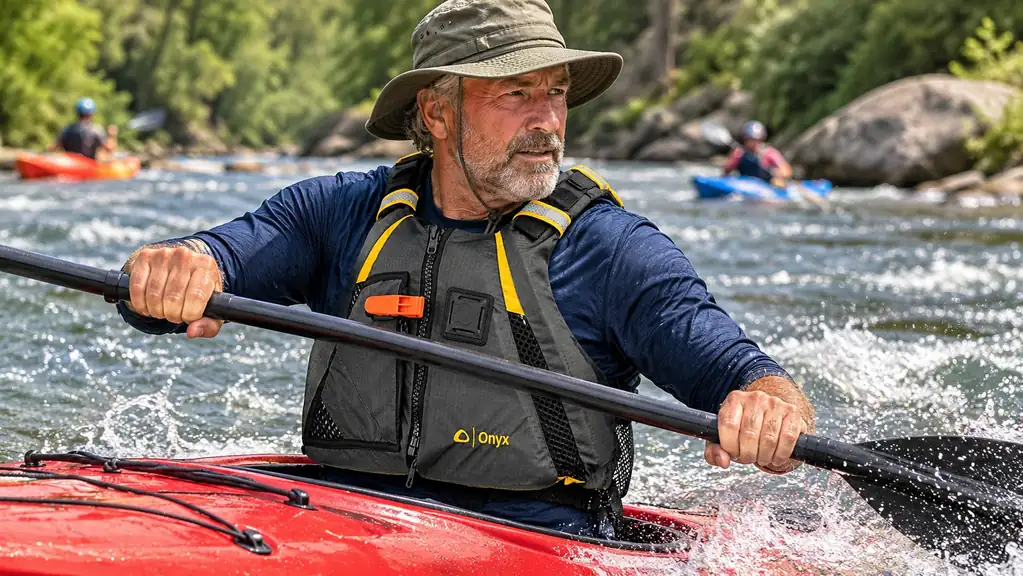
The vest I settled on is the Onyx MoveVent Dynamic Paddle Vest. Mine has been in my river runner and in my solo canoe, on cold dam-release mornings and on easy class II floats with my wife Karen. It is not a magic garment. It will not make anybody a stronger paddler or a braver one. What it does is stay out of the way, and after 30 years that is about the highest praise I can give a piece of paddle gear.
The reason it works is the back panel, and almost nobody talks about that part. A general-purpose vest carries a slab of foam across the lower back. That slab lands right on the seat back of a kayak, or against the pedestal of a solo canoe, and it levers the vest upward every time you lean into a stroke. The MoveVent's back is a mesh panel made to accommodate most canoe and kayak seat backs. In a boat that has an actual seat back, that single design choice is the whole game.
The mesh panel in the back means the seat back pushes on mesh, not on foam. Everything else about this vest is secondary to that.
The back panel is the reason paddlers keep this one
Mesh back sized to sit over most canoe and kayak seat backs, adjustable side belts and shoulder straps, large armhole openings, a built-in whistle and SOLAS-grade reflective accents.
Amazon Check Today's Price on Amazon →The second thing I noticed was the armholes. They're cut large, which sounds like a brochure line right up until you spend a day doing forward strokes and cross strokes and bow draws. I can reach out for a full sweep without the front of the vest dragging across my chest. In the canoe, where the stroke is longer and the reach is bigger, it matters even more. My old vest had me shortening my stroke without ever realizing I was doing it.
Fit comes from adjustable side belts and shoulder straps, with a buckle and zipper closure. Onyx builds it as a universal fit in medium-large for people 90 pounds and over. It snugs down where I want it, and Karen can reset it for herself on shuttle days in about a minute. At 1.7 pounds it isn't wearing on me by the end of a hot afternoon, and the warranty runs a year.
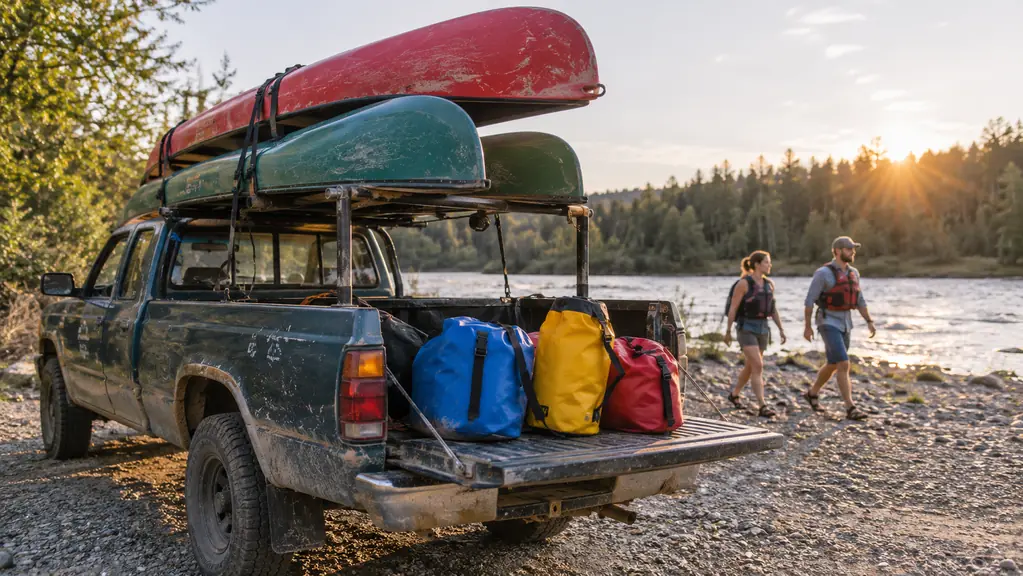
Two details I did not expect to care about: the whistle and the reflective accents. The whistle is built into the vest, which means it is on me when I'm chasing a swimmer and my boat is somewhere downstream. The SOLAS-grade reflective material catches a headlamp at the takeout, which is usually when we're loading boats onto the truck rack in the dark. Small things. They stay small right up until the afternoon you need them.
What it will not do: it will not turn a bad decision into a good one. On a cold runoff day the water still takes your breath away no matter what you're wearing, and a vest does not read a rapid for you. I tell every beginner the same thing in the first five minutes of a clinic. Gear is the last line, not the first. Judgment, a clean wet exit, and the discipline to get out and scout a rapid you don't like are what keep you out of trouble.
I also carry a camera. Nothing big, just something small enough to live in a dry bag, because I like photographing herons and the late light coming off flat water. That has nothing to do with the vest except this: large armholes and a back panel that doesn't press on my seat back mean I can twist and shoot without the whole thing shifting around my ribs. Paddling and photography reward the same thing, which is gear you forget you're wearing.
What I'd Tell You If We Were Sitting at My Kitchen Table
Buy a vest that fits your boat, not just your chest. Put it on, sit in your kayak or your solo canoe, and lean forward the way you do when you take a stroke. If the back of the vest hits the seat back and shoves the front panel up toward your chin, that vest will be a problem by hour four, no matter how good it looked on the rack. Then reach forward like you mean it. If the armholes grab you, you'll feel it in ten seconds. The Onyx MoveVent passed both tests for me in a boat with a seat back, which is why it's the one I reach for. And one more thing, the thing I'd say to anybody who asked: go take a class. No vest has ever taught anybody an eddy turn, and no piece of gear replaces judgment on a river.
The ten-second test: sit in your boat and lean forward
If the seat back shoves the vest up toward your chin, keep looking. If it doesn't, you've found the one. Mesh back, adjustable side belts and shoulder straps, built-in whistle, SOLAS-grade reflective accents.
Amazon Check Today's Price on Amazon →