
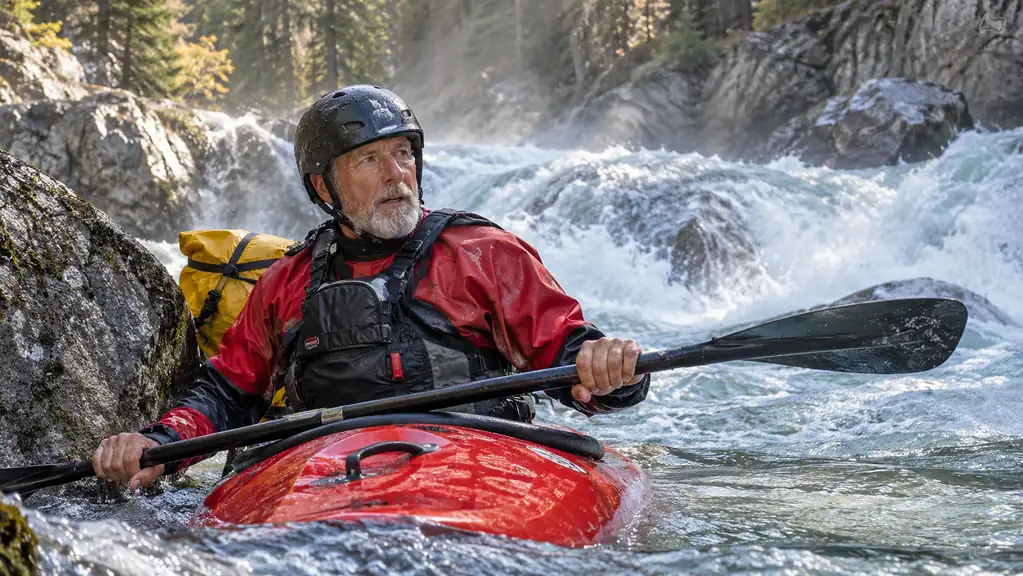
The first time I lashed a roll top bag to the deck of my solo canoe I did it wrong, and the river pointed that out inside a minute. That was a long time before an Earth Pak dry bag ever showed up at my place. I have paddled whitewater for close to thirty years and I teach beginner clinics on the Ocoee and the Nantahala most weekends from spring runoff into late summer. I have watched a lot of gear quit on people at exactly the wrong moment. So a bag sitting on 33,418 reviews with a 4.7 average does not impress me on sight. It makes me want to fill it with a towel and dump it in the river.
This is the honest version of that test. The Earth Pak dry bag is a genuinely useful piece of gear and it has kept my camera dry on days when I had no business having a camera on the water. It also has habits the product page does not mention, and one of them cost me a wet hour on a dam-release morning.
The Quick Verdict
A dry bag that does its one job well. The roll closure punishes sloppy folding and the strap is not a pack harness, so buy it for what it is.
Amazon Check Today's Price →The bag I will put a camera in, and the one habit I never skip
The 20 liter Earth Pak is the size I reach for on a day run. Squeeze the air out, roll it three times, snap it shut, and it stays dry through a wet exit. Check the size chart before you order, because the strap setup changes with capacity.
Amazon Check today's price on Amazon →How I've Used It, and What I Was Testing For
My 20 liter rides in three places. It goes behind the seat of my river runner, lashed to a deck line with the web handle. It sits under the thwart in the solo canoe on the flatter stretches where I am actually trying to photograph birds instead of survival-bracing. And on shuttle days it rides in the truck bed next to the boats, clipped off so it does not slide around the rack.
What goes inside is the same every trip. A dry fleece layer, a small lunch, keys, a headlamp, and the camera body with one lens. That last item is the reason I own a dry bag at all. Photography from the boat and the bank is the other half of why I am out there, and a camera that takes on water is a very expensive lesson. So I tested this bag the way I test anything that touches the camera, which is to say meanly.
The test that matters is not the garden hose. A hose tells you the material is waterproof, and 500D PVC is waterproof on day one. The test that matters is a swim. I filled the bag, rolled it, and swam it through the washout below a rapid on a release day, then opened it on the bank. The towel inside was dry. So was the camera. That is one data point, not a guarantee, and I will get to the part where the closure can fail you.
One thing to say plainly before anything else. A dry bag is not a flotation device and it is not a substitute for a PFD. It is not a throw bag. It holds gear and it keeps gear dry when you roll it correctly. Nothing in this review replaces training, a roll you can actually count on, and the judgment to walk a rapid you do not like the look of.
The Roll Top Only Works If You Roll It
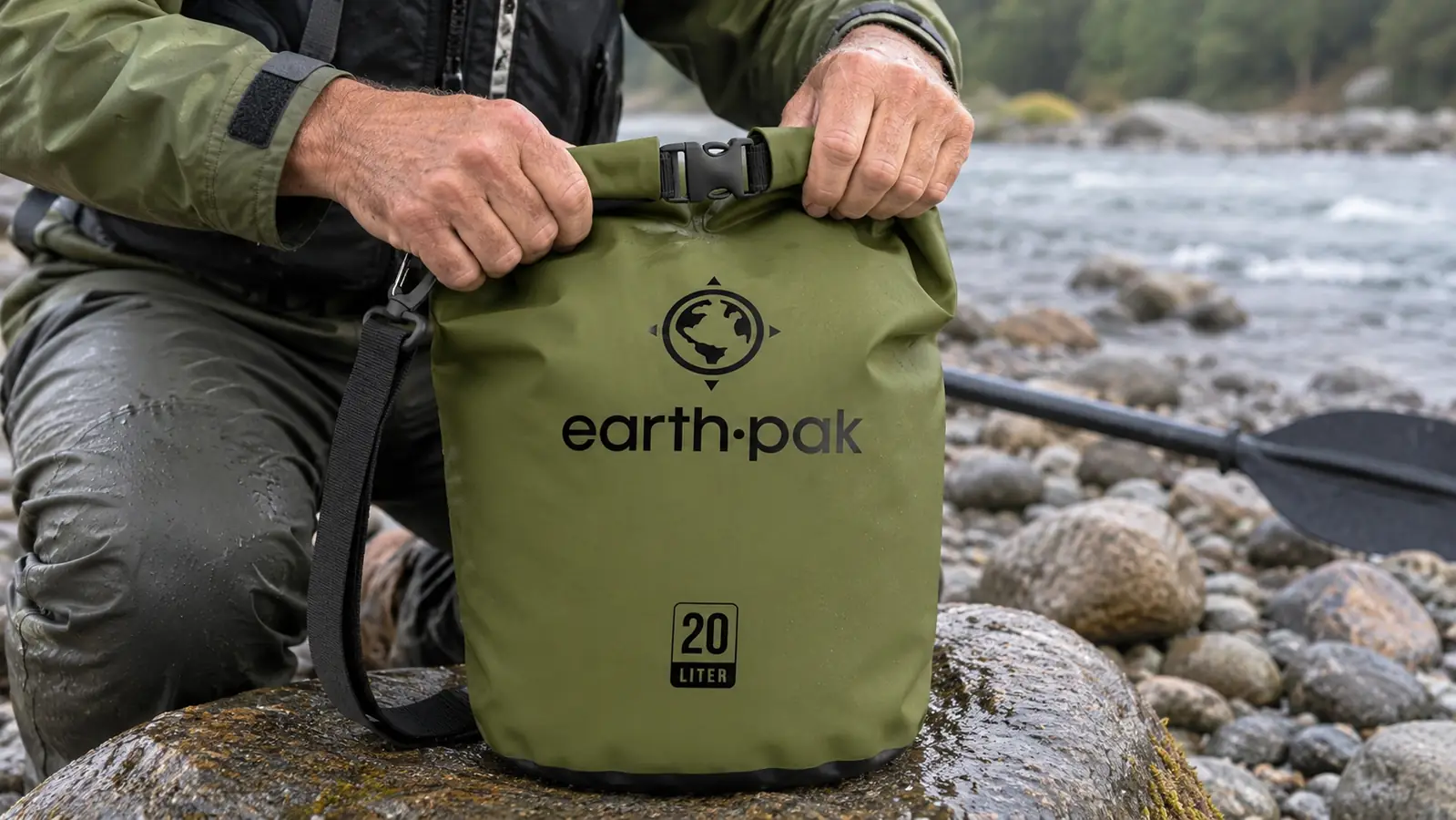
The closure is a roll top seal with a snap buckle, and it is the whole product. The material is 500D PVC, abrasion resistant and thick enough that it holds a fold instead of sagging out of one. But a roll top is not a zipper. It has no teeth that align themselves. It is a mechanical seal that depends entirely on how you fold it, and it will do exactly what you tell it to do.
Three rolls. That is the number I teach and the number I use. Squeeze the trapped air out first, press the top flat, fold it over on itself three times with some tension in each fold, then bring the buckle across and snap it down. Fold it twice and you have a bag that keeps rain out and lets river water in. The folds need to sit flat and even. A crooked fold leaves a channel and a channel leaks.
I learned that the boring way. Cold April morning, air temperature in the thirties, I was helping two beginners get their skirts seated and I rolled my own bag in a hurry with gloves on. Two folds. Buckle snapped, looked fine, felt fine. Somewhere in the second rapid the bag took a soaking and I opened it at the takeout to a wet fleece and a camera bag with water sitting in the bottom seam. The bag did not fail. My rolling failed. That distinction matters more than any star rating, and it is the reason I now check the roll on my own bag the way I check a beginner's PFD straps.
Two habits fixed it for good. First, I keep sand and grit out of the fold line, because a grain of sand between two folds will wear the coating and give water a path. Second, I roll the bag before it goes in the boat, not after, when my hands are cold and I am in a hurry to be on the water.
The bag did not fail. My rolling failed. That distinction matters more than any star rating.
What 20 Liters Actually Holds
The 20 liter measures 9.5 inches by 9.5 inches by 17 inches, and those numbers are worth reading twice before you order, because most people picture something bigger. Seventeen inches tall is roughly the length of my forearm plus a hand. It holds a day. It does not hold a weekend.
On a real day run I get a dry fleece, a rain shell, lunch, a liter bottle laid on its side at the bottom, keys, headlamp, and the camera with one lens mounted. It closes with room to spare and rolls down clean. What it will not take, no matter how hard you sit on it, is a tent, a sleeping bag and a pad. If you are packing for an overnight, you are shopping a size up from this one.
The line runs 5L, 10L, 20L, 30L, 40L and 55L, and the strap arrangement changes across that range. The 10L and 20L come with a 24 to 42 inch adjustable shoulder strap. If your plan is to carry the bag any real distance rather than clip it in a boat, read the size descriptions on the listing carefully, because the carry setup is not identical at every capacity. My own advice: if you paddle with camera gear and you are torn between two sizes, take the larger one. A bag that is a little too roomy still rolls down tight. A bag that is too small gets stuffed and then rolled badly, and a badly rolled bag is the failure mode.
Where It Earns Its Keep
Abrasion is where this material shows its worth. In a canoe, gear sits on a floor that collects grit, and that grit grinds against whatever is down there for four hours. After two seasons of that, my bag has scuffs on the bottom and no thinning I can feel through. I have dragged it over wet rock on a portage and heard the sound a bag makes when it is being scraped, and it came out the other side intact.
The weight is 13.6 ounces, which means it disappears into a trip. Empty, it folds down flat and stuffs into the bow of the canoe or the space behind a seat. That sounds like a small thing until you have carried a rigid dry box down a quarter mile of trail with a boat on your shoulder.
The web handle is more useful than I expected. It is what I lash to a deck line, and it is what I grab when the bag is sitting in the bottom of the canoe and I want it out fast. The utility pocket takes a whistle and a length of cord, and I leave anything that actually matters inside the roll where the seal is. I also want to be clear about what the bag is rated for: the bag is waterproof, and the included phone case carries the IPX8 rating. Those are two different things, and it is worth keeping them straight in your head.
What Nobody Tells You About Carrying It
Here is the part the listing will not say out loud. On the 20 liter, you get an adjustable shoulder strap, and a shoulder strap is not a backpack harness. If you load this bag heavy and walk a half mile of portage trail, it swings against your hip and there is no padding anywhere on it. I have done it. It works. It is not comfortable, and I would not plan a long carry around it.
The second thing is cold. The 500D PVC gets stiff when the air is near freezing, and a stiff bag is a bag that resists a clean fold. On a thirty degree morning the material takes both hands and a little patience to roll down flat, and cold hands are not patient. Do the roll before you pull the gloves on and you will never think about it again.
The third thing is trust. A dry bag that weeps is worse than no dry bag at all, because you stop double-checking the things inside it. I treat the roll line as a wear item and I inspect it every spring the way I inspect my straps and my helmet. If the fold line starts showing pinholes or the coating gets chalky and stiff, that bag gets demoted to hauling rope and the camera gets a new one.
What I Liked
- 500D PVC takes real abrasion on a gritty canoe floor without thinning
- Swam the 20 liter through a washout on a release day and the contents stayed dry
- 13.6 ounces empty, folds flat, stows in the bow or behind a seat
- Web handle makes lashing to a deck line quick and secure
- Included IPX8 phone case is genuinely useful on the water
- Six sizes from 5L to 55L cover day runs and overnights
Where It Falls Short
- Roll closure leaks if you fold it twice instead of three times, and there is no warning
- No padding on the shoulder strap, so long portages are unpleasant
- PVC stiffens in near-freezing air and fights a clean fold
- 20 liters is a day bag, not an overnight bag, and the photos make it look bigger
- The utility pocket is not where you put anything you need to stay dry
- Nothing in the box but the bag and the phone case, no repair patch or desiccant
The Phone Case, the Pocket, and the Small Stuff
The included phone case is IPX8 certified, and it is a real inclusion rather than a throwaway. Mine has been in a PFD pocket through a full season of wet exits and it has not fogged. The test I run on any new waterproof case is dull and effective: seal it with a folded paper towel inside and sink it in a bucket for an hour. If the towel is dry, the case is fine. Do that test before you trust it with a phone you need.
What comes in the box is the dry bag and the phone case. That is the list. There is no repair patch, no desiccant pack, no strap sleeve. If you want a desiccant pack in with your camera gear, buy one, because mountain humidity in a sealed bag does not have anywhere to go.
The buckle is a snap closure and it has held through two seasons of being opened and closed on cold mornings. I check it the same way I check everything, by looking at it with my hands and not my eyes, and so far it has not given me a reason to worry.
Wear, Care, and How Long It Lasts
Care is three steps and takes five minutes. Rinse it with fresh water after a river day, because river silt in the fold line is what kills these bags. Dry it fully open, inside and out, and do not seal it wet. Store it loose and unfolded somewhere out of direct sun, because UV is unkind to coated fabric over years.
What fails first, in my experience, is the fold line and then the strap stitching. The fold line takes every bit of the flex and every bit of the grit. The stitching on the strap attachment sees load every time you pick the bag up full. Both are things you can watch for, and both give you warning if you look.
Mine is into its third season. The bottom is scuffed, the fold line is still smooth to the touch with no pinholes, and the buckle snaps with the same authority it did on day one. When the fold line does go, I will retire the bag without complaint, because it spent three seasons doing the one job I bought it for, and it did that job while I dragged it over rocks.
Who This Is For
This is the right bag for a day paddler who wants gear to come out dry at the takeout without spending a lot on a name brand. It suits a kayaker stuffing a layer and a lunch behind the seat. It suits a canoeist who wants a soft bag that will not fight for space under a thwart. It suits anyone carrying a camera or a phone on the water who understands that the seal is only as good as the fold, and who will actually take ten seconds to fold it properly every single launch.
It also suits the instructor crowd, which is my crowd. I carry one bag and I want it to be soft, light, and predictable, because I have enough hard objects in the boat already.
Who Should Skip It
Skip the 20 liter if you are packing for overnights. You want a bigger capacity or a different system entirely, and stuffing this one until it will not roll is the fastest way to end up with wet gear. Skip it if you plan to hike your gear a long way, because the strap on the 20 is not built for that and your shoulder will tell you so. Skip it if you want a bag you can treat carelessly, because a roll top rewards attention and punishes shortcuts. And skip any dry bag, this one included, if you are hoping it will make up for a roll you cannot rely on or a rapid you should have scouted. Gear keeps water out. Judgment keeps you out of the water.
If you will fold it three times, it will keep your camera dry
The 20 liter Earth Pak has done three seasons of river days for me, and the only failure was mine. Check the size chart, run the paper towel test on the phone case, and roll it properly.
Amazon See current price and sizes on Amazon →