

Most reviews of the Onyx MoveVent tell you the same four things. It is comfortable, it has a mesh back, it comes with a whistle, and it costs less than what the paddling shops push. All of that is true. None of it answers the question a beginner actually has, which is whether the vest will do its job on a cold, pushy class III day when the swim turns out longer than they planned. I have taught weekend clinics on the Nantahala and the Ocoee for a lot of years, and I have watched plenty of borrowed vests ride up over plenty of heads. So here is the version of this review I would give a student standing in the gravel lot with one boot on and the boat still strapped to the truck.
The short version: the Onyx MoveVent is an honest recreational paddling vest that does what it is built to do across a wide range of body types. It is not a rescue vest. There is no quick release belt, no tether point, and no pocket to stow a throw rope or a camera. Nothing on it is designed for the paddler who intends to spend real time in the water managing somebody else's swim. That is not a knock on the product. It is a category statement, and Onyx does not pretend otherwise. What follows is where the vest earns its keep on the river, and the three places it will let you down if you expect it to be something it is not.
The Quick Verdict
A comfortable, well made recreational vest for class II and calmer water. Buy it for the mesh back and the fit range. Do not buy it expecting rescue hardware or dry storage, because it has neither, and it does not claim to.
Amazon Check Today's Price →The vest I point most first year students toward
Fits paddlers from 90 to 300 pounds, weighs 1.7 pounds, and the mesh back panel clears the tall seat back on most kayaks. For class II and flatwater, this is where I start people.
Amazon Check Today's Price on Amazon →How I've Used the MoveVent
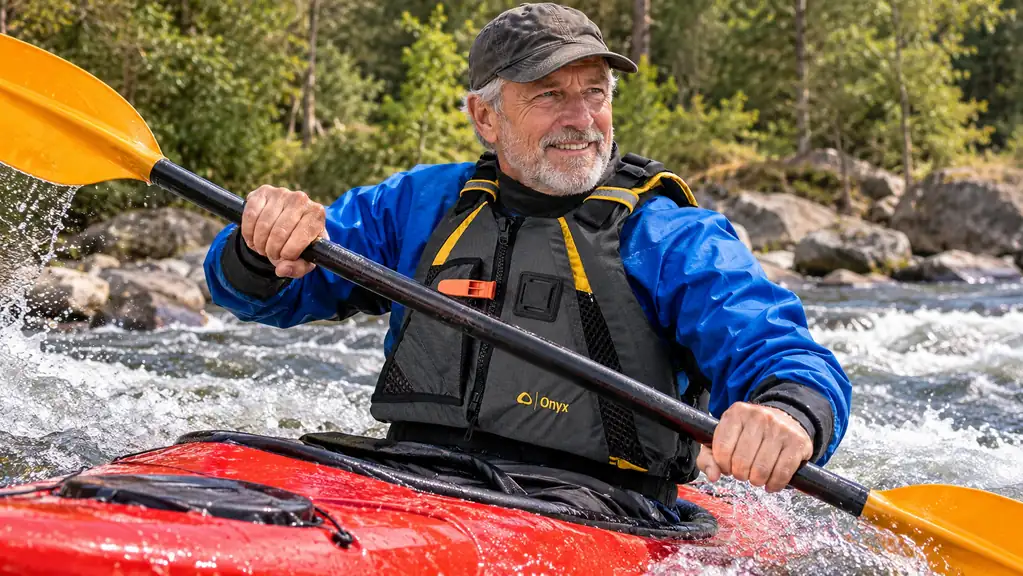
I have worn one for two full seasons of teaching, mostly because a clinic day is not a paddling day. You are wading, standing in an eddy demonstrating a draw stroke, walking a boat up a gravel bar, and getting in and out of the kayak forty times before lunch. The Onyx MoveVent handles that stop and start kind of use without the shoulder straps sawing at your neck, which is more than I can say for two vests I have owned. My river runner and my solo canoe both have tall seat backs, and the mesh panel means the seat back sits against padding designed to sit against padding instead of against a solid slab of foam.
Cold water is where a vest tells you the truth about itself. Spring runoff here runs in the forties, and the dam release days on the Ocoee stay cold even in July. A vest that fits badly is a vest you notice at the exact moment you should be thinking about the eddy line and not about your shoulders. In two seasons I have not once had to think about this one while I was busy. That sounds like faint praise. From an instructor it is not. The gear that works is the gear that disappears.
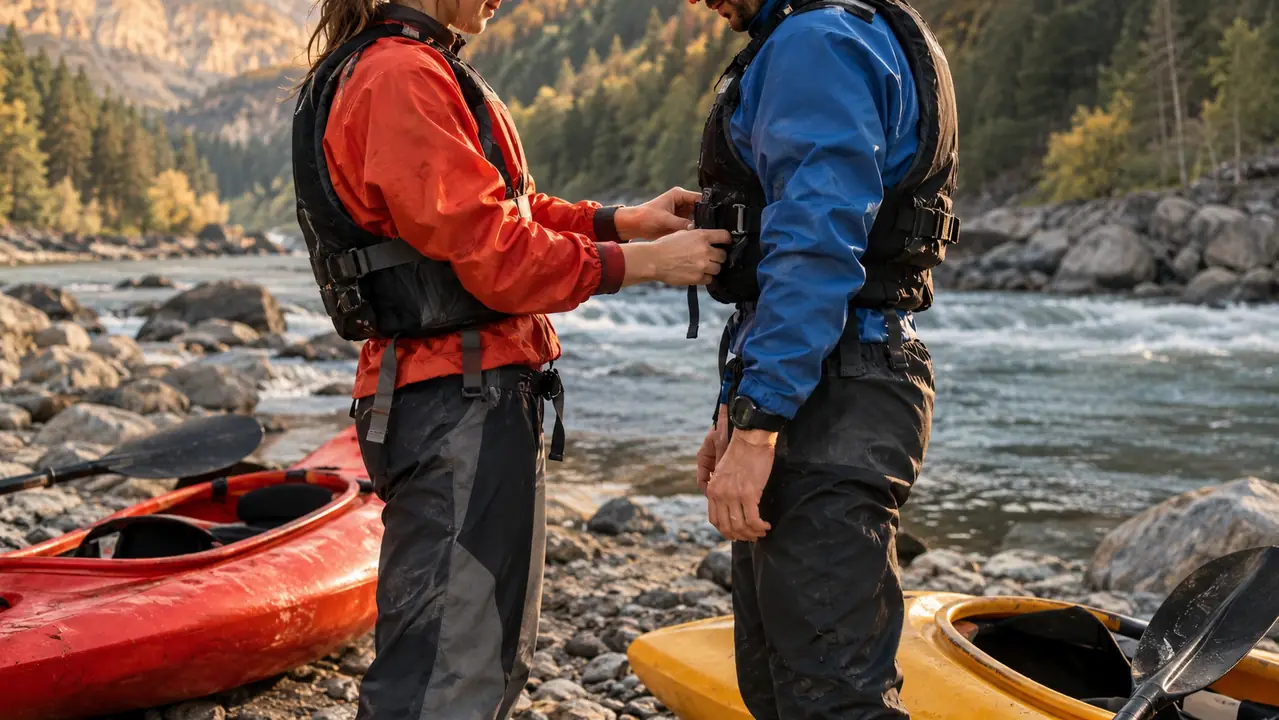
Karen paddles class II and III with me and runs shuttle on the harder days. She is smaller than I am and she has firm opinions about shoulder straps. Her read after a season is that the side belts do most of the work of keeping the vest from climbing, and the shoulder straps mostly hold the panels where they belong. That matches what I feel. If you only snug the shoulders, the vest will ride up the first time you swim. Take up the side belts first and let the shoulder straps set the height.
I shoot photographs from the boat and from the bank, birds mostly, and a vest with no pocket is a vest that makes you plan ahead. The MoveVent has no storage. Not a small pocket, not a lash tab worth using. My dry bag rides in the boat, and if I want the camera on my body it goes under the vest, which is awkward and slow. If you carry a camera, a radio, or a phone on the water, know going in that this vest will not help you carry it. That is the trade for the low weight and the clean front panel.
What the MoveVent Gets Right
The mesh back panel is the feature that matters, and it is the one I would pay for. Most recreational vests put foam across the entire back, and that foam fights the tall back of a kayak seat. On a two hour float you feel it. On a six hour float you are squirming and shifting and blaming the boat. The panel on this vest is cut away where the seat back lands, so the seat does its job and the foam that remains sits to either side of it. In my solo canoe the thwarts sit lower and the benefit is smaller, but it is still there on a long day.
Large armhole openings sound like a catalog line until you spend a day doing forward strokes in a borrowed vest that binds across the front of the shoulder. This one does not bind. I can get my elbow up near my ear for a high brace without the panel digging into my collarbone, and my students, who are usually stiffer than they want to admit by two in the afternoon, do not complain about the shoulders. The adjustable side belts and shoulder straps are plain webbing and buckles, nothing to break and nothing to figure out in the dark, and the neoprene at the shoulders keeps the edges from rubbing a bare neck in July.
The small equipment is done properly. There is a built in whistle on the front, which is the piece of safety gear people leave in the truck until the day they need it, and this one cannot be left behind. The reflective accents are the SOLAS grade material rather than a decorative stripe, and they light up in a headlamp beam when somebody is sweeping the bank for you at dusk. The vest weighs 1.7 pounds. That is light enough that I forget I have it on, and flat enough to live behind the seat of the pickup between trips without taking up the space a bulky vest does.
Durability has been fine. Two seasons of clinic use means abrasive gravel, wet truck beds, sunscreen, and being dragged in and out of boats by people who are learning. The nylon shell has not worn through anywhere, the webbing has not frayed at the buckle ends, and the neoprene at the shoulders has held its shape. Onyx lists a one year manufacturer warranty, which is not generous for paddling gear, but I have not needed to test it. I expect this vest to be in service for several more seasons of teaching before the foam starts to feel tired.
Where It Falls Short
No pockets. None at all. This is the complaint I hear most from people who paddle with a camera, a radio, or a rescue knife, and it is a fair complaint. A recreational vest at this level usually gives you one small pocket for a snack and a set of keys. The MoveVent gives you the whistle and nothing else. If your day involves gear that needs to be on your body rather than in the boat, this vest will frustrate you, and you will end up clipping things to a strap where they swing and catch on things.
The fit range is wide and that cuts both ways. Onyx lists this as a universal fit covering paddlers from 90 pounds to 300 pounds in a medium to large. That is a remarkable span for one shell, and it means the paddler at 95 pounds and the paddler at 290 pounds are wearing the same panels with the same volume of foam. The webbing takes up the difference in girth. It does not change the bulk. A very small paddler will find the vest sits lower and feels larger than a vest cut for them, and a very large paddler will find less margin in the adjustment than that number suggests. Try it on over the layers you actually paddle in.
The entry is a zipper with buckles, and that matters more than people expect. A front zip vest is comfortable and easy to get into at the put in, but it is slower to shed than a side entry vest if you need to get out of it in a hurry on a bank with a hypothermia situation developing. I have never had to do that with this vest, and I do not want to. It is a consideration, not a deal breaker, for the water most buyers of this vest will paddle.
It is not a rescue vest, and it should not be treated as one. There is no quick release harness, no tether point, and no reinforced attachment for a rescue belt. On class II and easy class III that is fine. Most of the people I teach will never need those features. But if you are moving toward class IV, or you want to be the person who can set up a live bait rescue for a pinned boat, this is the wrong vest and no amount of adjustment changes that. Buy a whitewater specific vest built around a quick release harness for that work. Buy this one for the family float and the easy run.
Tighten the side belts first. A vest that only has its shoulder straps snug will climb over your head the first time you swim.
The Fit Question Nobody Explains Well
Here is the thing the listing does not say clearly. All of the adjustment on this vest lives in the webbing, not in the foam. The side belts pull the front and back panels toward each other, and the shoulder straps set the height. Get the height wrong and no amount of side belt tightening will save you, because the vest slides up until the shoulder straps stop it. Put the vest on over a dry top or a fleece, snug the shoulder straps until the front panel sits at the top of your sternum, then take up the side belts until you can pull the vest down but it does not move up when you raise your arms over your head.
Then test it like you mean it. Find a deep spot or a pool and swim. A vest that fits on land can still climb on a real swim, and the only way to know is to get wet with people watching. I make every student do this in the eddy at the put in. It takes three minutes and it tells you more than any size chart ever will. If the vest rides up around your ears, it is too loose, too big, or the wrong cut for your torso, and no adjustment will fix a cut that does not match your body. That is why I tell people to buy this one somewhere with a return window they can live with.
One more thing, and it goes for any vest you buy from any brand. Read the approval label inside the shell when it arrives. Every vest sold as a life jacket in this country carries one. Do not take my word for it, and do not take a bullet point on a product page for it. The label is the only statement that counts, and it takes ten seconds to check before you ever get on the water.
What I Liked
- Mesh back panel clears the tall seat back on most kayak seats, which is the difference between a long day and a long complaint
- Large armhole openings let you reach a high brace without the panel digging into your shoulder
- Adjustable side belts and shoulder straps cover a genuinely wide range of body types
- Built in whistle you cannot leave in the truck, plus SOLAS grade reflective accents for low light
- 1.7 pounds and flat enough to forget about, comfortable enough that students stop fiddling with it
Where It Falls Short
- No pockets at all, not even one small one for keys or a snack
- Universal fit from 90 to 300 pounds means both extremes get a compromise in bulk and margin
- No quick release harness or tether point, so it is not a rescue vest and should not be used like one
- Nowhere on the body to carry a camera, radio, or throw rope
- Front zip entry is slower to shed than a side entry vest if you ever have to get out fast
Gear Does Not Replace Judgment
I say this at every clinic and I will say it here. A vest is flotation and a whistle is a whistle. Neither of them scouts a rapid for you, reads a horizon line, or tells you that the log strainer on the outside of the bend has moved since last spring. The paddlers I worry about are not the ones with inexpensive gear. They are the ones who bought good gear and stopped thinking. Cold water, a loaded canoe, and a bad eddy line will beat a well fitted vest every time if the person inside it has not practiced anything.
So use the MoveVent for what it is. Wear it zipped and buckled on every run, including the flatwater shuttle where nothing ever happens. Snug the side belts. Learn to swim in it in a safe eddy before you need to swim in it in a rapid. Take a class, or paddle with people who have taken one, and practice a wet exit until it is boring. That combination is what keeps people out of trouble on moving water. The vest is one component of it, and it is the easiest component to buy, which is exactly why people overestimate it.
Who This Is For
The MoveVent fits the paddler who does class I and II most weekends, takes the occasional easy class III when the level is friendly, and wants one vest that works in a kayak and a canoe without fuss. It fits the family that needs three of them, wants the vests comfortable enough that nobody argues about wearing one, and would rather be on the water than adjusting webbing in a parking lot. It fits the instructor or guide who is in and out of the boat all day and wants something light with a mesh back that clears a seat.
It also fits the beginner who has not bought a boat yet, and who should be spending their money on a lesson rather than on rescue hardware they do not know how to use. I would rather see a new paddler in this vest with a wet exit class behind them than in a technical rescue vest they have never practiced with. The vest does not make the paddler. It just stops being the thing that gets in the way of the paddler learning.
Who Should Skip It
Skip it if you are headed toward class IV and beyond. You want a whitewater vest with a quick release harness, a tether point, and a cut that stays put through a heavy swim in a hole. The MoveVent is not that vest, and Onyx is not claiming it is. Skip it if you paddle with a camera, a radio, or a rescue knife that needs to be on your body rather than in the boat, because there is nowhere to put any of it and you will spend the season improvising.
Skip it if you sit at either end of the sizing range and you can try something cut for your build instead. A universal fit that spans 90 pounds to 300 pounds is a compromise by definition. It works well for most people in the middle. It is not the best answer for a 100 pound paddler or a 285 pound one, and a shop that lets you sit in three vests will beat a size chart every single time. If you cannot get to a shop, order from somewhere with free returns and plan to send one back.
If your paddling is class II and you want to stop thinking about your vest, start here
Mesh back that clears a kayak seat, large armholes, a whistle you cannot leave in the truck, and a fit range from 90 to 300 pounds. Confirm the size before you order, then go swim in it before you run anything.
Amazon Check Today's Price on Amazon →