

The first thing that goes numb on a March release day is not your hands. It is your ears. I have been teaching beginner clinics on the Ocoee and the Nantahala for the better part of thirty years, and I will tell you plainly: a paddler who is distracted by cold water running into his ears is a paddler who is not looking at the next eddy. I still flinch when the first wave washes over the cockpit rim. That flinch is what finally pushed me to change what I had on my head.
For most of my years on the river I wore a cheap foam helmet with no ear coverage at all. It kept rock off my skull, and I defended it for a long time. What it did not do was keep 48 degree water out of my ears on the third lap of a dam release weekend, or stop a low branch from raking across the side of my head when I eddied out under a hemlock. So last spring I bought the Vihir Adult Water Sports Adjustable Helmet with Ears, partly out of curiosity and partly because I was tired of being cold. It has been on my head for a full season of teaching now.
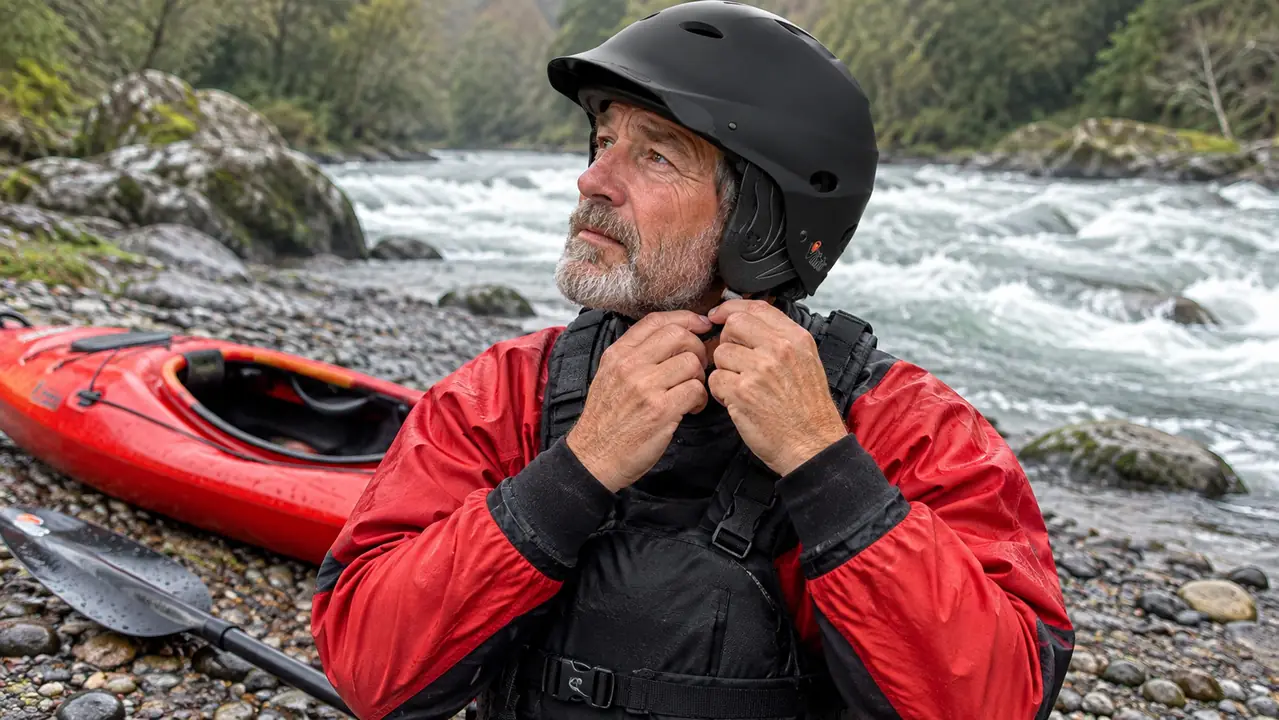
Here is what I noticed in the first ten minutes. The shell is ABS over an expanded polystyrene liner, and the whole thing weighed 420 grams on my kitchen scale, lighter than the helmet it replaced. My hat size put me in the L, listed at 59 to 63 centimeters, and the adjustment took up the rest of the gap. A poorly fitting helmet is worse than no helmet on moving water, because it rides up in a swim and you spend the rest of the day fussing with it. This one sat still through a wet exit and a rough roll session in the flatwater eddy below the put in.
The ear coverage is the whole reason I bought it. The flaps keep water from slapping straight into the ear canal on a wave train, and they do not muffle my hearing. That last part matters more than most people realize. I need to hear a student calling from behind me, a paddle tapping a hull, and the change in water sound when a rapid turns serious. I have taught in helmets that turned my head into a drum, and I did not keep them.
The 11 vents are not a marketing line either. Front channels pull air through on a July shuttle ride when the helmet is still on my head and I am too lazy to take it off. I would trade two of those vents for a little more coverage at the temple, but that is a preference, not a defect. What I will not do is pretend the vent count makes this a cool helmet in August. It is cooler than a solid shell. That is the honest version.
420 grams, ear flaps that block spray without blocking a student's voice, and a fit that held through a wet exit. That is the entire list of what I needed.
The Ear Coverage Is Why I Bought It, and Why I Still Wear It
A general water sports helmet with ear flaps, ABS shell over an EPS liner, 420 grams, and a size L that fits 59 to 63 centimeters. Not a whitewater specific helmet. For cold water, long days and beginner clinics, it does the job I bought it for.
Amazon Check Today's Price on Amazon →Where I have been honest with my students, I will be honest here. The Vihir is a general water sports helmet. It is not a whitewater specific helmet and I do not treat it like one. It does not carry a certification I can point to, and I will not pretend otherwise. If you run class IV and up, or you spend your season on shallow rocky creeks where the shell takes real impacts, buy a purpose built whitewater helmet and do not let a review talk you out of it. I run class II to III with a clinic of beginners in front of me, and that is the use I bought this for.

I also take a camera on the water. Birds mostly, and the way light comes through the gorge in the late afternoon. My dry bag lives behind the seat, and a helmet that pours water down my neck every time I tip my head back is a helmet that fogs a lens and ends a photo. The Vihir's ear flaps cut most of that drip. Small thing, but small things are what a river day is made of.
Two seasons of teaching is hard on gear. My Vihir has been dropped on gravel ramps, sat in the bed of an old pickup under a two boat rack in the sun, and been dunked more times than I can count. The liner is still tight to the shell, the adjustment still holds, and the strap takes a set without slipping. The one year warranty has not been needed. The webbing shows a little fuzz where it rubs, which is normal and worth watching.
None of this makes anybody safe. I tell my students the same thing every Saturday morning at the put in: gear buys you margin, judgment buys you a way out. A helmet is one piece of a system that includes a fit you actually checked, a throw rope you know how to use, and the discipline to walk a rapid when the level is wrong. Buy the helmet because your ears are cold and your head is worth covering. Then go take a class.
What I'd Tell You If We Were Sitting at My Kitchen Table
I would tell you to buy it if you paddle cold water, teach, or spend long days sitting in a boat where your ears take a beating. The size range is generous, the ear flaps work, and 420 grams does not fatigue your neck on a long shuttle. I would also tell you to check the fit before you commit to a size, to shake your head hard and make sure the shell does not rock, and to remember that no helmet on earth will save a paddler who will not scout. Karen paddles class II and III with me and she wears a Vihir now too, for the simple reason that she got tired of being the only person on the shuttle with cold ears. That is the entire pitch. Cold ears, fixed.
Cold Ears, Fixed. Everything Else Is Still Up to You.
Ear flaps that do not cost you your hearing, 11 vents for the shuttle ride, and an adjustable fit for 59 to 63 centimeters. Read the sizing chart, check the fit on land, then go paddle with people who will tell you the truth about the level.
Amazon See the Vihir Helmet on Amazon →